
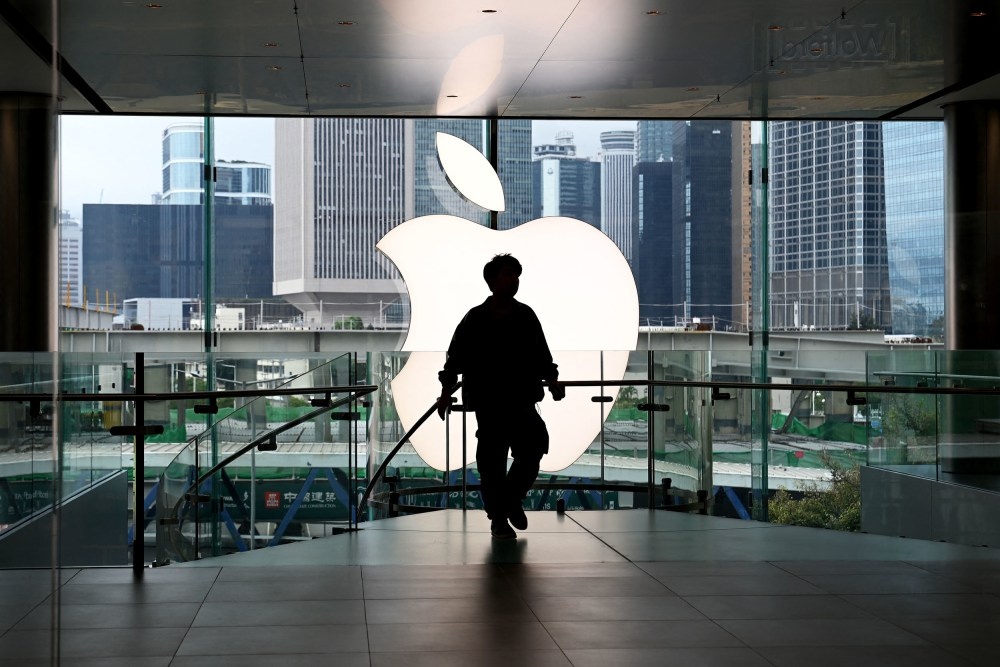
Apple said the removal was “based on an order” from the Cyberspace Administration of China.
Apple company has confirmed that it has removed two popular gay dating and social apps, Blued and Finka, from its app store in China. The move has stoked fears within the country’s LGBTQ (lesbian, gay, bisexual, transgender, and queer) community.
A spokesperson for the company stated the removal was "based on an order" from the country's cyberspace regulator. "We follow the laws in the countries where we operate," the spokesperson added. However, Apple did not elaborate on the specific nature of the order.
The apps, Blued and Finka, suddenly became unavailable for download on iOS devices. Users of Android devices, however, can still download them from their official websites. Concurrently, a "lite" version of the Blued app remains available on Chinese app stores for both Apple and Android devices.
BlueCity, a Beijing-based tech company, owns both Blued and Finka. Blued alone has approximately 56 million registered users, according to data from a Hong Kong marketing agency. BlueCity did not release a statement explaining why its apps were pulled from Apple's store.
The removal has raised significant concerns among LGBTQ people in China , who have faced shrinking public spaces and a lack of legal protections in recent years. "We’re like a frog being boiled in warm water," one user wrote on a social media platform. "Eventually, it will make gay people feel like secrecy is the norm".
Sam Chan, a digital cultures lecturer at the University of Sydney, noted that in a relatively conservative society, gay dating apps have been "crucial" for queer men in China. He specified these apps are vital to "find community, a sense of belonging, and build relationships".
In an interview, Chan stated that while digitally savvy individuals can turn to other online platforms, the removal of Blued and Finka has "undoubtedly taken away the most accessible and direct means of connection". He argued that the change reflects a "less tolerant stance by the state".
Chan added that many queer men in China saw these apps as a source of hope for "greater visibility and acceptance of the queer community someday". "Now, with these apps gone, that hope has been significantly diminished," he concluded.
In the country, homosexuality was decriminalized in 1997 and removed from the list of mental disorders in 2001. Despite this, same-sex marriage is not legal , and there is limited official recognition of gay relationships. Although surveys indicate growing public support for LGBTQ people , homosexuality has become a major subject of censorship. As an example, in September, a U.S. movie featuring a same-sex wedding scene was digitally altered for screenings in mainland China, changing one of the two men into a woman.
Asian Editorial Department: Lu Junxiu