
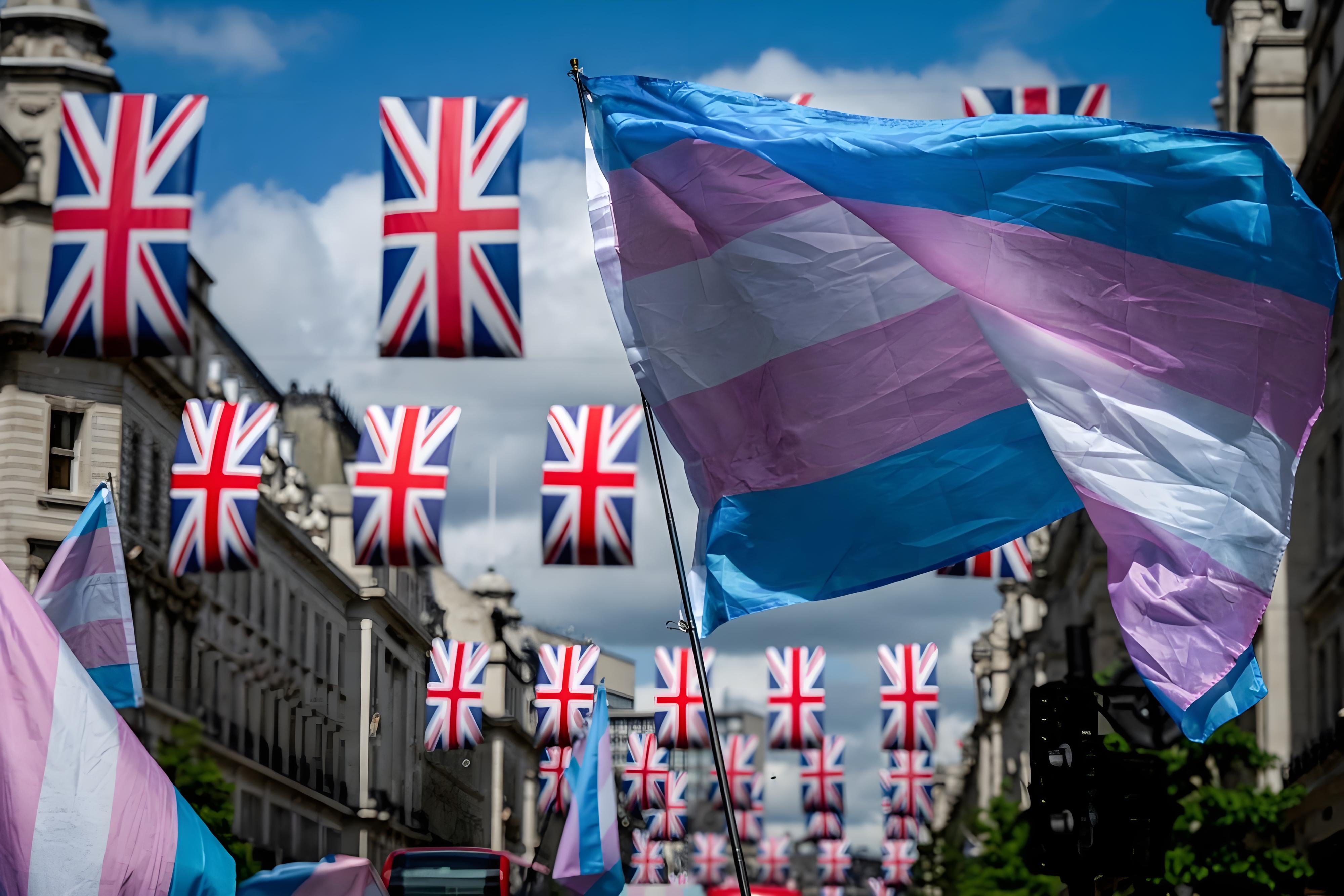
Protesters in London on May 25.
Nate Rae, a 33-year-old transgender man, had lived openly and felt secure since coming out as transgender in his late 20s—until a U.K. Supreme Court ruling on the legal definition of biological sex changed his life entirely. Now, this PhD student and science communicator, who grew up in a small Scottish town and currently lives in London, weighs risks repeatedly every day, judging which places are safe for him and which pose threats.
Issued in April, the ruling clarifies that under equality laws, the term "sex" refers specifically to biological sex—meaning transgender women are still legally classified as male, and transgender men as female. The Equality and Human Rights Commission (EHRC), the body responsible for enforcing equality laws in the U.K., stated in its interim guidance on the practical impact of the ruling that transgender people should be barred from facilities and services aligned with their lived gender, including toilets, hospital wards, and refuges.
"It’s almost like harassing transgender people has been made legal," Rae said in an interview at Gay’s The Word, Britain’s oldest LGBTQ bookstore, adding that he now feels "hyper-aware" of being watched by others. "I have to consider things I never cared about before: Where can I go? Where am I safe?"
Rae only started his medical transition last year. Since most people still perceive him as female, he often uses women’s toilets. However, after the ruling took effect, he has been denied access to specific toilets multiple times and even called "disgusting" when using a women’s toilet; on one occasion, someone approached him and asked, "Do you know there are kids here?"
A report released by TransActual, a transgender rights organization, in August noted that after the ruling, some transgender people have planned to leave the U.K., some have chosen to hide their identities, some deliberately avoid public places like hospitals, others have been outed as transgender at work, and a few have even withdrawn from social life entirely. Keyne Walker, the organization’s strategy director, said the EHRC’s interim guidance has already had a "dire impact" and that the commission’s interpretation of the ruling could have been far less "extreme."
Currently, several institutions have adjusted their transgender-related policies based on the ruling: The Football Association has banned transgender women from competing in women’s football in England; the British Transport Police requires that same-sex searches of detainees during custody be conducted according to their biological sex. An EHRC spokesperson said all the commission’s actions since the ruling are based on the law, and the guidance submitted to the country’s government is both legally accurate and clear.
Rae worries that this ruling by the Supreme Court will deter more transgender people from living freely in their gender identity—and even if they insist on doing so, their safety will be at risk, as the ruling has altered the public’s perception of the transgender community. "Every young transgender person I’ve interacted with is terrified," Rae said. His work includes teaching science to young people, and these young individuals now often feel confused: "Will I be able to live the life I want as the person I want to be?"
European Editorial Office: John