
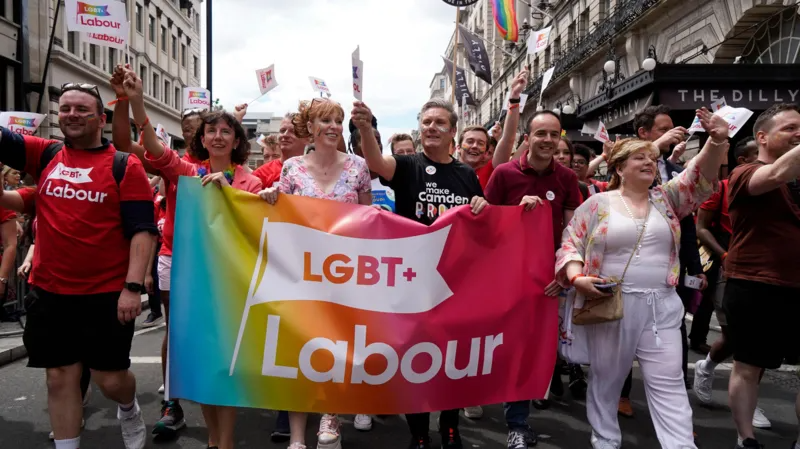
Keir Starmer and Angela Rayner attend Pride in London 2022 alongside Emily Thornberry and Anneliese Dodds
Four major UK Pride organisations—Birmingham, Brighton, London, and Manchester—have suspended political parties’ official involvement in their events, citing "unequivocal solidarity" with the transgender community. The move follows a Supreme Court ruling defining "woman" as biological sex under the Equality Act, sparking debates over single-sex spaces and trans rights within LGBTQ+ circles.
In a joint statement, organisers warned of a "disturbing global trend of rolling back LGBTQ+ rights" and urged the UK to lead in human rights. The ban aims to "deny platforms to those failing to protect our community," with demands including strengthened trans protections under the Equality Act, improved gender recognition processes, and funding for trans-led services.
While some lesbian groups welcomed the ruling as safeguarding single-sex spaces, trans activists and allies raised concerns about social exclusion. The Equality and Human Rights Commission’s guidance advising biological sex-based access to facilities like restrooms has intensified discussions on trans privacy.
Attracting over a million attendees annually, the Prides previously hosted political representatives advocating party policies. The LGBT+ Lib Dems expressed disappointment at the ban, seeking dialogue to rebuild collaboration. Organisers clarified the decision targets systemic inaction, not individual parties, emphasizing the need for "tangible commitments" to trans welfare.
European Editorial Office: John