
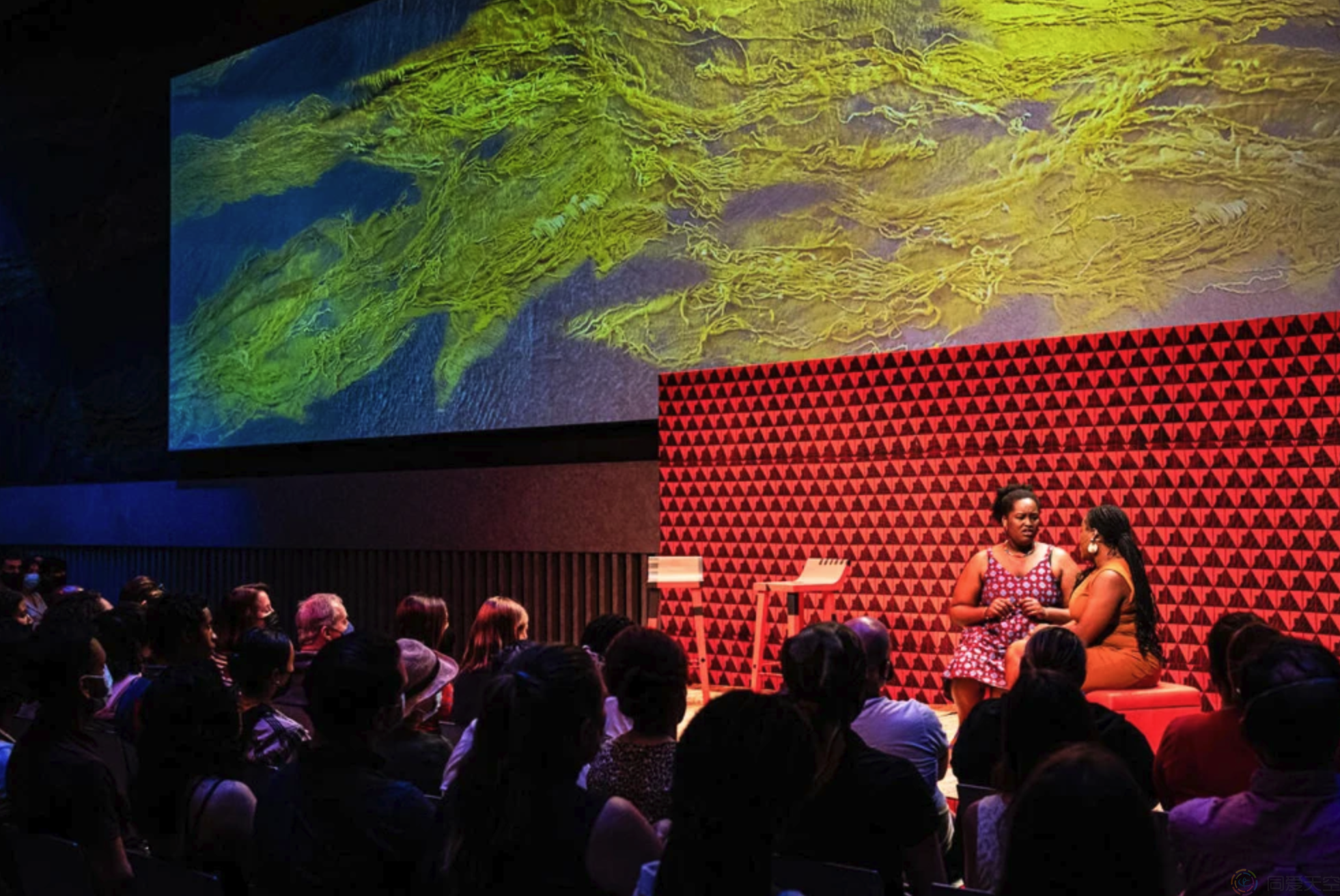
Janet Kilonzo, left, and Lebane Ayivor in "The Survival" by Achiro P. Olwoch at Lincoln Center for the Performing Arts during the 2022 Criminal Queerness Festival.
The National Endowment for the Arts (NEA) has revoked funding for the National Queer Theater’s annual Criminal Queerness Festival in New York, prompting the organization to launch online fundraising for the event that showcases works by playwrights from countries where LGBTQ people face criminalization or censorship.
In December, the NEA awarded a $20,000 grant to the Brooklyn-based nonprofit, comprising 20% of the festival’s budget, according to board co-chair Jess Ducey. However, the agency stated in a recent policy update that it would focus on projects "reflecting the nation’s rich artistic heritage," terminating awards that "do not align with new priorities" such as supporting HBCUs, Hispanic institutions, American independence celebrations, AI initiatives, and community services.
The email to the theater explicitly excluded the Criminal Queerness Festival—scheduled for June 11-28 and featuring plays set in Uganda, Indonesia, and Cuba—from eligible projects. Ducey emphasized the grant’s critical role in funding 50 artists’ salaries, warning that a funding shortfall could lead to scaled-back productions or delayed payments.
The decision follows the theater’s involvement in an ACLU lawsuit against the NEA over a certification requiring artists to pledge not to "promote gender ideology," a provision derived from related policies restricting funding for such content. While the NEA later removed the certification, it retained eligibility criteria to revoke grants for projects deemed to promote gender ideology, with the lawsuit ongoing.
Ducey highlighted the broader implications, stating, "This is about an attack on artists and stories from marginalized groups—migrants, people of color, queer and trans individuals. The arts are a vital avenue for their voices." The festival now relies on crowdfunding to sustain its mission amid policy shifts impacting LGBTQ-focused initiatives.
Editor: Robin