
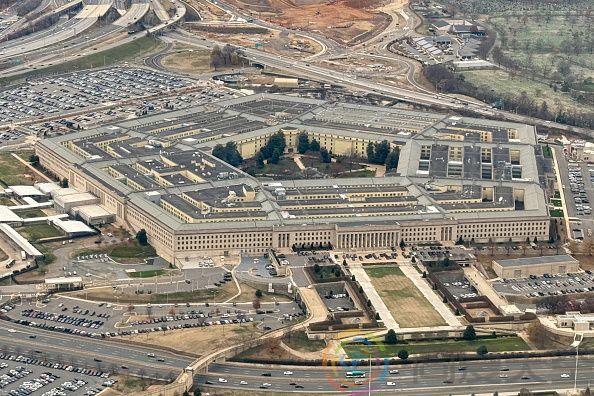
Recently, news from the Pentagon in the United States has drawn widespread attention. A memo submitted by the Pentagon to the court on Wednesday, February 26, shows that transgender service members in the U.S. will face discharge, unless they receive waivers.
Since his first term in office, Donald Trump has imposed restrictions on transgender service members. The content of this memo further expands the scope of these restrictions. The memo released on Wednesday evening indicates that the ban on transgender service members has been extended to active-duty military personnel.
The memo states that the U.S. government aims to establish higher standards for the combat readiness, combat effectiveness, cohesion, and other aspects of active-duty service members. It also stipulates that the Pentagon must establish a mechanism to identify transgender service members within 30 days and start the discharge process for them within 30 days. Service members who have been diagnosed with gender dysphoria, have a history of such disorders, or exhibit symptoms consistent with gender dysphoria will be discharged.
Regarding waivers, the Pentagon said that a waiver will only be granted when retaining the service member serves a compelling government interest in directly supporting combat capabilities. The conditions for obtaining a waiver also include "demonstrating that the service member's gender identity has remained stable for 36 consecutive months and there is no clinically significant distress."
The introduction of this policy has sparked a strong response from transgender rights advocates and led to legal action. In January of this year, the National Center for Lesbian Rights (NCLR) and GLAD Law jointly filed a lawsuit challenging the Trump administration's decree banning transgender people from serving in the military.
It is worth noting that earlier this month, the Pentagon also said that the U.S. military will no longer allow transgender individuals to join the military and will stop providing medical procedures or assistance related to gender transition for service members. During his first term, President Trump announced a ban on transgender individuals enlisting in the military. At that time, while allowing active-duty transgender service members to remain in the military, the recruitment of new transgender individuals was frozen. This series of measures has continuously reduced the space for transgender service members in the military, and the impact on the U.S. military and society remains to be further observed.
Editor: Newsroom - Robin