
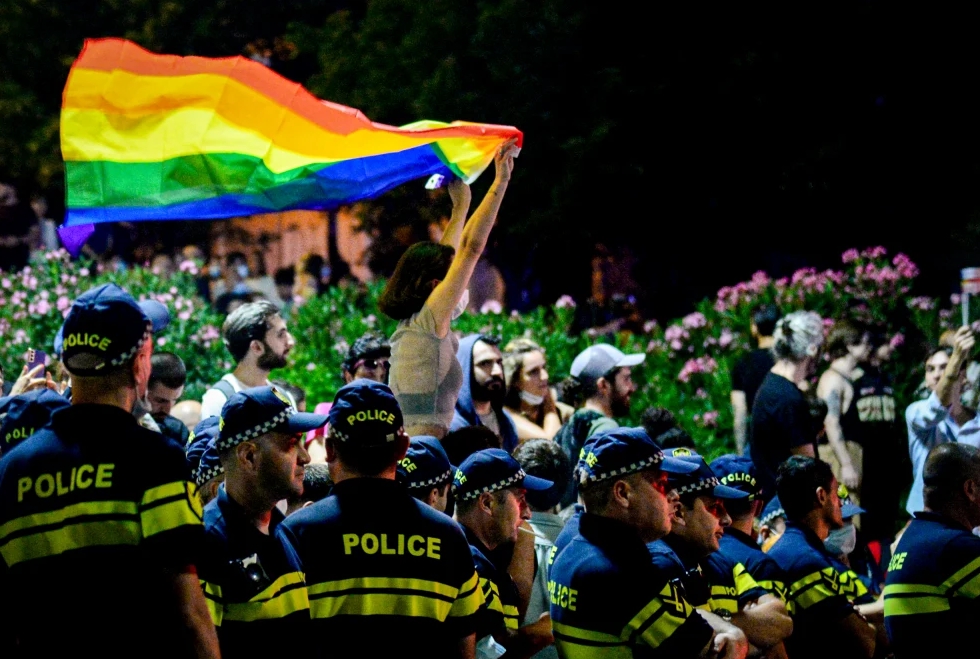
TBILISI, Georgia - The Georgian parliament on Tuesday passed the third and final reading of a bill on "family values and the protection of minors" that would impose extensive restrictions on LGBTQ rights.
The bill would provide a legal basis for authorities to ban Pride events and public displays of the LGBT rainbow flag, and to censor films and books. Leaders of the ruling Georgian Dream party claim that it is necessary to safeguard traditional moral standards in Georgia, where the highly conservative Orthodox Church holds significant influence.
However, activists argue that the measure aims to gain conservative support ahead of the parliamentary election on Oct. 26. Georgia, which has ambitions to join the European Union, has drawn concerns from Western governments that it is now tilting back towards Russia.
Tamara Jakeli, the director of the Tbilisi Pride campaign group, said the bill, which also restates the existing ban on same-sex marriage and prohibits gender reassignment surgery, could force her organization to close. "This law is the most terrible thing that has happened to the LGBT community in Georgia," Jakeli, 28, told Reuters. "We will most likely have to shut down. There is no way for us to continue operating."
Georgian President Salome Zourabichvili, a critic of Georgian Dream whose powers are mostly ceremonial, has indicated that she will veto the bill. But Georgian Dream and its allies have enough seats in parliament to override her veto.
In Georgia, LGBTQ rights are a contentious issue. Polls show widespread disapproval of same-sex relationships, and the constitution prohibits same-sex marriage. In recent years, participants in Tbilisi's annual Pride marches have faced physical attacks from anti-LGBT protesters.
The issue has become more prominent ahead of the October election. Georgian Dream, which is seeking a fourth term in office, is campaigning vigorously against LGBTQ rights. The party's top candidate for the election is billionaire ex-prime minister Bidzina Ivanishvili. As relations with Western countries have soured, the party has deepened its ties with neighboring Russia.
Earlier this year, it passed a law on "foreign agents" that was criticized by European and U.S. critics as authoritarian and Russian-inspired. Its passage sparked some of the largest protests Georgia has seen since its independence from the Soviet Union in 1991.
Opinion polls show that the party (which passed a law banning anti-LGBT discrimination in 2014 before shifting to more conservative positions) remains the most popular in Georgia, although its support has declined since 2020 when it won a narrow majority in parliament.
In an advertisement aired by the ruling party on Georgian television, the face of Pride director Jakeli appears alongside the words: "No to moral degradation." Jakeli said that the bill could only be stopped if Georgian Dream loses power in October, but she also noted that the country's opposition parties are not openly supportive of LGBTQ rights. She called on, "The only way we can survive in this country and make progress on LGBTQ rights is for a large number of people to go to the elections and vote for change."
Reviewer: News Editorial Department - Robin Source: NBC Universal Media