Recently, former Scottish Labour leader Kezia Dugdale has warned that the progress in
LGBT rights in Scotland is "fragile" and revealed that she still checks her surroundings before holding her wife's hand in public.
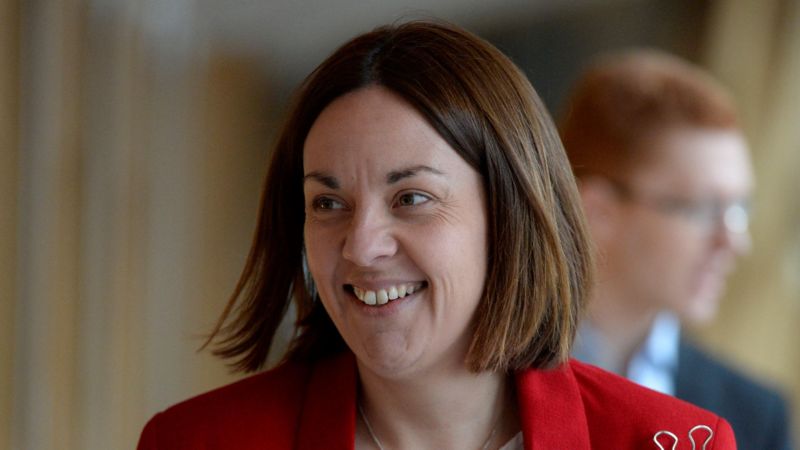
Dugdale married SNP Education Secretary Jenny Gilruth in 2022. In an article for the Scottish Sun On Sunday, she wrote that they were one of more than 10,000 couples who have benefited from the Scottish parliament's 2014 decision to allow same-sex couples to marry.
Ms Dugdale said that Scotland has made "incredible" progress since then. However, she added, "Progress is fragile. Ask yourself if you've ever paused to check your surroundings before holding your partner's hand on a night out. I still do - every single time."
Now an associate director at the University of Glasgow's Centre for Public Policy, Ms Dugdale said that the change 10 years ago to allow
same-sex couples to marry "delivered equality". It also showed that
gay people "are not something different, something other, something less". She emphasized that 10 years of equal marriage "is a real milestone in our country's recent history because it shows us how much progress we've made". She also said that
gay people like her felt safer and more emboldened to live their lives openly.
Although she voted for the Marriage and Civil Partnership (Scotland) Act at Holyrood a decade ago, Ms Dugdale said to her "shame" that she was not "out" at the time. She added, "I was one of the 129 MSPs who voted on the legislation back in 2014 and I did so from the depths of my closet. To my shame now, I wasn't out because I didn't think I could be. I thought there would be a professional price paid for talking about who I loved and who I wanted to be with."
The act was approved with 105 MSPs voting in favour, 18 opposed, and no abstentions. Of those who voted against the bill, seven were members of the SNP, eight were Conservatives, and three were Labour MSPs.
Ms Dugdale said that she decided to keep her sexuality private after "growing up with the Aids crisis on the TV and the vilification of gay people that came with it". But now, in contrast, she said that "gay characters in soap operas are 10 a penny" and "schools have LGBT clubs where kids are encouraged and supported to be who they are". She said, "It's light years of progress, but it doesn't happen by accident, it happens by the passage of acts of law like the Equal Marriage Act."
The Marriage and Civil Partnership (Scotland) Act 2014 came into effect on 16 December 2014 and brought Scotland in line with England and Wales, where couples had been able to marry since March. Between then and the end of September this year, 10,138 same-sex couples have gone on to marry. Analysis of the National Records of Scotland's figures up to the end of September this year shows that same-sex marriages have taken place in all 32 of Scotland's local authorities. The council area with the highest number was Edinburgh with 1,853. Glasgow came second with 1,402 while Dumfries and Galloway came third with 1,379, thanks to the appeal of Gretna as a marriage destination. The months of July, August and September are the most popular for a wedding.
Editor: News Editorial Department - Daya
