
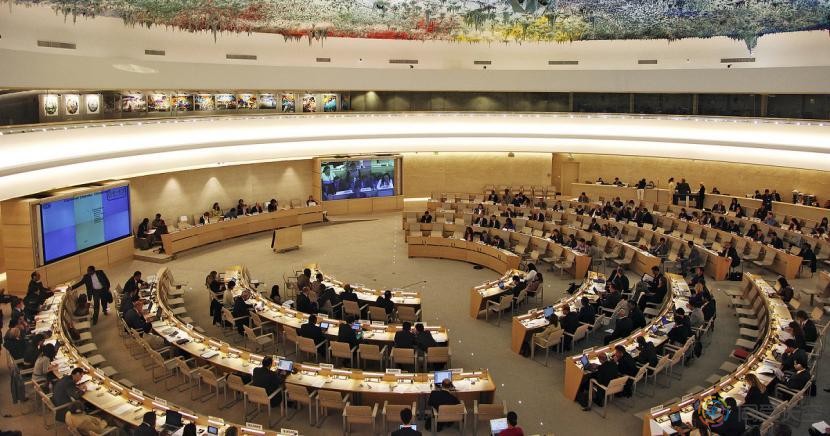
The UN Human Rights Council has adopted a landmark resolution to address discrimination faced by intersex people
This unprecedented resolution, which recognizes that “people with congenital variations in sex characteristics” face discrimination “in all spheres of life,” was adopted on April 4 without opposition from any member state. The resolution, initially proposed in February by the governments of Australia, Chile, Finland, and South Africa, pledges to combat “violence and harmful practices” faced by intersex people worldwide.
Twenty-four countries, including Belgium, France, Germany, Japan, India, Lithuania, the Netherlands, and the United States, voted in favor of the resolution. Twenty-three countries, including Bangladesh, China, Georgia, Indonesia, Kazakhstan, Kuwait, the Maldives, Sudan, and the United Arab Emirates, chose to abstain.
The resolution cites experts who note that, on average, at least 1.7% of infants worldwide are born intersex, meaning their sex characteristics do not conform to the male-female binary. Additionally, as part of the resolution, the UN High Commissioner for Human Rights will issue a report outlining the extent and types of discrimination faced by intersex people, as well as methods to mitigate such discrimination, including “legal protections and remedies.”
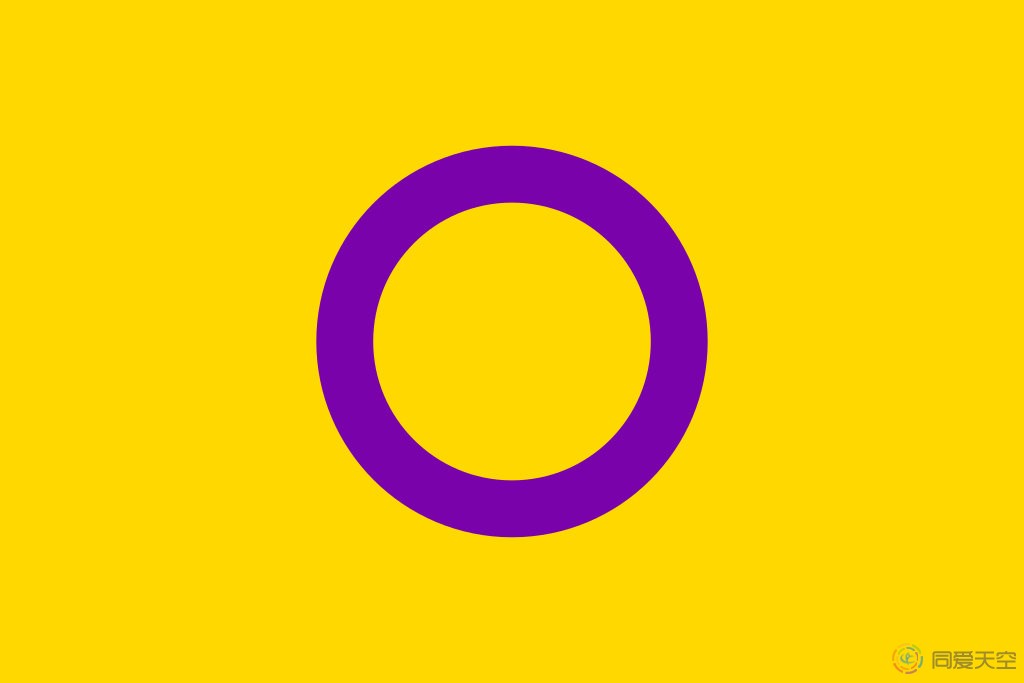
The Intersex Flag
The UN Human Rights Council is expected to convene its 60th session next year, during which a workshop will be held to help clarify the root causes of discrimination against intersex people—such as “misunderstandings and inaccurate information”—and to examine best practices for supporting the intersex community.
The European chapter of the non-profit LGBTQ+ advocacy organization ILGA called the resolution “groundbreaking” and “an important reference point for European institutions,” adding that “countries should follow it and take action.”
Prior to the Human Rights Council vote, U.S. Ambassador to the United Nations Michèle Taylor told The Hill that the resolution “demonstrates the international community’s commitment to addressing and alleviating the challenges faced by intersex people.” She added: “It underscores the necessity of adopting an approach that respects human rights, avoiding pathologizing and stigmatizing language; instead, it advocates that all people, regardless of their sex characteristics, should enjoy autonomy, dignity, and equality.”
Translated by Kevin
Source: PinkNews