

New research aimed at addressing infertility has once again demonstrated that it is possible to convert human skin cells into eggs. About 20 years ago, a similar technique was used to create the cloned sheep “Dolly.” Although researchers say it will be at least another decade before the technology can be put into practical use, they believe it could help infertile couples and women who are unable to produce eggs.
The technology is also expected to be used for male couples, utilizing their DNA to create an embryo that would then be carried to term by a surrogate mother. Currently, gay male couples wishing to have a biological child must rely on an egg donor, whose egg is fertilized with one of the men’s sperm, meaning the child will carry DNA from the donor.

This new study was conducted by researchers at Oregon Health & Science University (OHSU) in the United States, and the results were published in the journal *Science Advances*. They used a method called “in vitro gametogenesis” (IVG) on mice.
They extracted the cell nuclei—the vital components within cells that carry all genetic information—from the mice’s skin cells. They then implanted these nuclei into donor eggs from which the nuclei had been removed.
An OHSU press release stated: “The researchers induced the skin cell nucleus to reduce its chromosomes by half (i.e., to a haploid state, similar to sperm and eggs), so that it could fuse with a sperm cell to produce a viable embryo.”
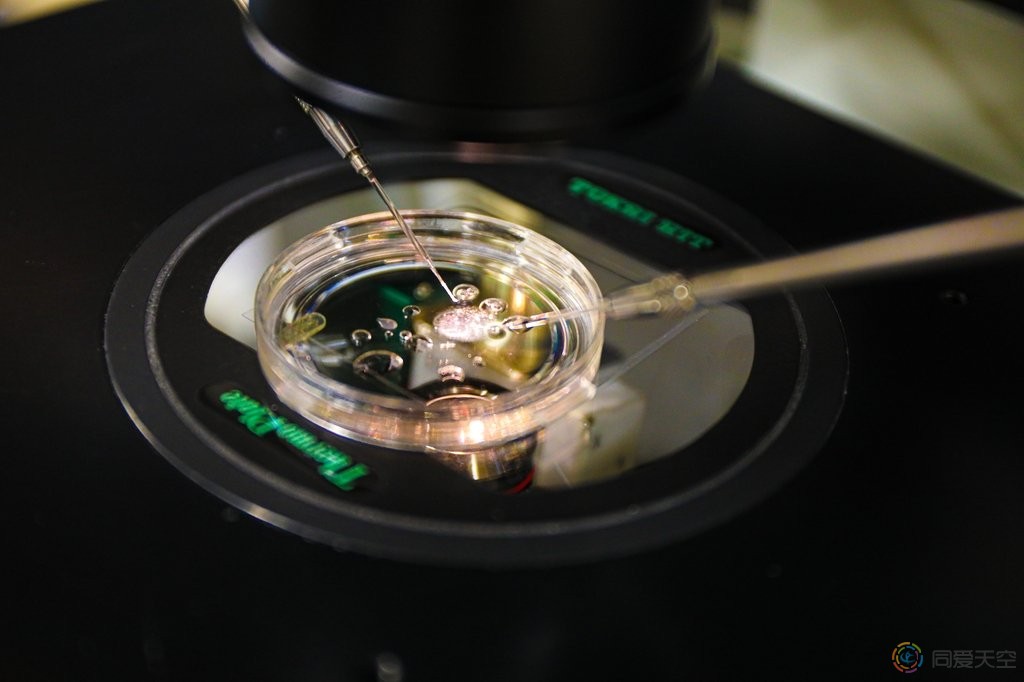
Dr. Shoukhrat Mitalipov, senior author of the study and director of the OHSU Center for Embryonic Cell and Gene Therapy, said: “Our goal is to create eggs for patients who cannot produce their own.”
One of the key steps in this process is the division of the skin cell nucleus into two after it is implanted into an egg. In some cases, its paired chromosomes separate perfectly into two halves. However, this is not always the case. The process still needs further refinement to avoid genetic abnormalities in the resulting embryos.
In a report published in 2022, OHSU scientists demonstrated a proof of concept, providing preliminary evidence of the method’s feasibility.
Dr. Mitalipov said, “This report essentially shows how we put this method into practice. In the next phase of this research, we need to determine how to improve the chromosome pairing process so that each pair of chromosomes separates correctly.”
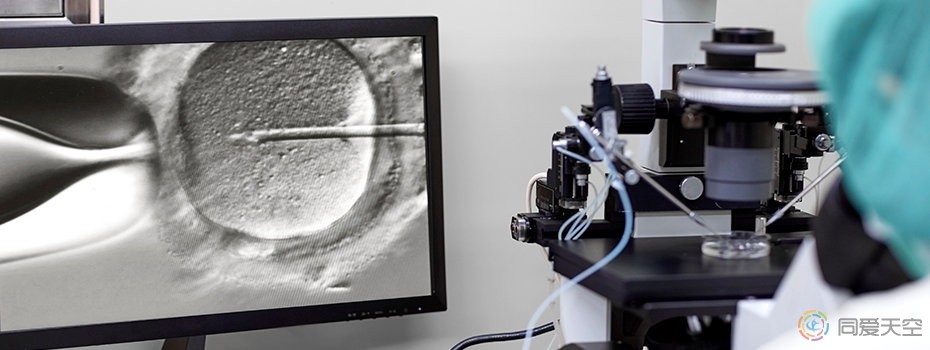
Other researchers in the field have focused on extracting “stem cells”—the most basic form of human cells during the embryonic stage, which gradually transform into specific cells such as brain, muscle, and liver cells during development—and converting them into egg or sperm cells. The OHSU research team stated that their method effectively bypasses this challenge, but one team member noted that the technology still requires several years of analysis.
Dr. Paula Amato, a professor of obstetrics and gynecology, said, “This research provides us with many unique insights, but there is still a lot of work to be done in the future to figure out how these chromosomes pair up and how they separate accurately into two halves, so that we can replicate what happens in nature.”
This study in Oregon follows a similar study published in Japan last year. The Japanese study successfully produced baby mice using DNA from two male mice, but their approach involved reprogramming skin cells from the male mice back into stem cells.
Translated by Kevin
Source: Queerty