
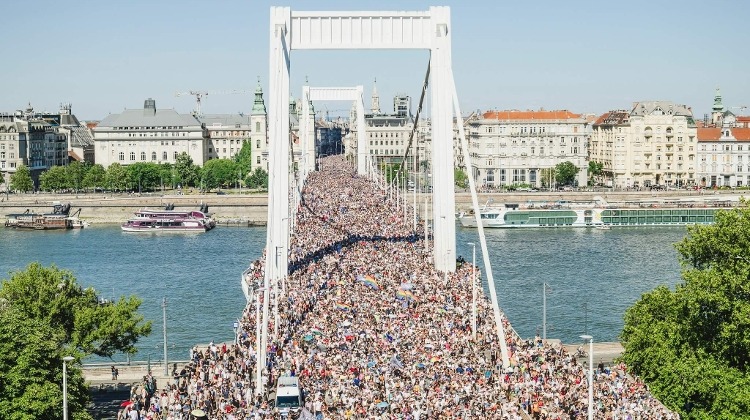
Event Overview and Participation Scale
Hungary's capital Budapest hosted its 31st annual Pride celebration on Saturday. The event proceeded within context of substantial political transformation. In April elections, Hungarian voters elected a new centre-right government led by Péter Magyar and his Tisza party, replacing Orbán's nationalist-populist administration.
The march commenced Saturday afternoon amid temperatures reaching minimum 100 degrees Fahrenheit (approximately 37 degrees Celsius), during Europe-wide record-breaking heat wave conditions. Organisers distributed water bottles to marchers; the city's public water utility opened fountains along the parade route to facilitate hydration.
Participants departed from Budapest's iconic Opera House, proceeded through the city centre, then crossed the Erzsébet Bridge spanning the Danube River. Hungary's LGBTQ+ community members and substantial numbers of supporters danced to musical accompaniment and displayed rainbow flags.
Previous Government Opposition and New Government Authorization
Former Prime Minister Viktor Orbán's government had implemented numerous anti-LGBTQ+ policies throughout its 16-year tenure. Approximately one year prior, Orbán's government enacted legislation and constitutional amendments seeking to prohibit Pride celebrations, drawing criticism from European Union human rights organisations and politicians.
Despite prohibition efforts, the previous year's Pride proceeded as planned and achieved record-breaking attendance, with organisers estimating participation at over 350,000. This substantial demonstration represented a significant challenge to the previous government's credibility.
During April elections, Orbán's nationalist-populist government faced electoral defeat. The new government, composed of Péter Magyar's Tisza party members, assumed power. Whilst the new government has not repealed Orbán-era legislation prohibiting Pride celebrations, police authorities authorised this year's event and provided security along the parade route. This shift represents substantial change in official position.
Participant Perspectives and Future Expectations
Participants expressed positive responses to the altered political environment. Luca Új, participating in her third Pride celebration, noted that the current march atmosphere felt more relaxed. She observed, "There used to be considerable tension. But now I perceive people as being happier, and there are more older individuals participating as well."
Kristóf Györgyi, attending Pride for the first time, travelled from southern city Szeged to participate. He expressed optimism regarding potential government expansion of LGBTQ+ rights. He noted, "The fact that Parliament is already engaging in discussion regarding whether children are better served with same-sex couples or remaining in orphanages represents a positive indicator." He referenced Orbán-era prohibitions on same-sex adoption and same-sex marriage.
Györgyi further stated, "Although legislation remains unchanged, our community is observing numerous hopeful signs."
International Legal Developments
The European Union's highest court issued April rulings determining that Orbán-era 2021 legislation prohibiting LGBTQ+ content availability to minors violated European Union law and breached foundational human rights and equality treaties. This judgment provided international legal support for Hungary's new government considerations regarding policy reform.
The previous government had consistently maintained that Pride celebrations violated children's rights to moral and spiritual development. However, human rights organisations and numerous experts have rejected this assertion.
Symbolic Significance of Political Transformation
This Pride celebration's successful occurrence represents substantial Hungarian political transformation. The transition from previous government prohibition to new government authorisation reflects shifted voter attitudes regarding LGBTQ+ rights. The previous year's participation of over 350,000 individuals despite prohibition demonstrated strong societal commitment to equality and inclusion.
Although the new government has not repealed all anti-LGBTQ+ legislation, its authorisation of the parade and parliamentary discussions regarding same-sex marriage and adoption rights indicate potential policy direction changes.
European Editorial Office: John