
Legislative Background
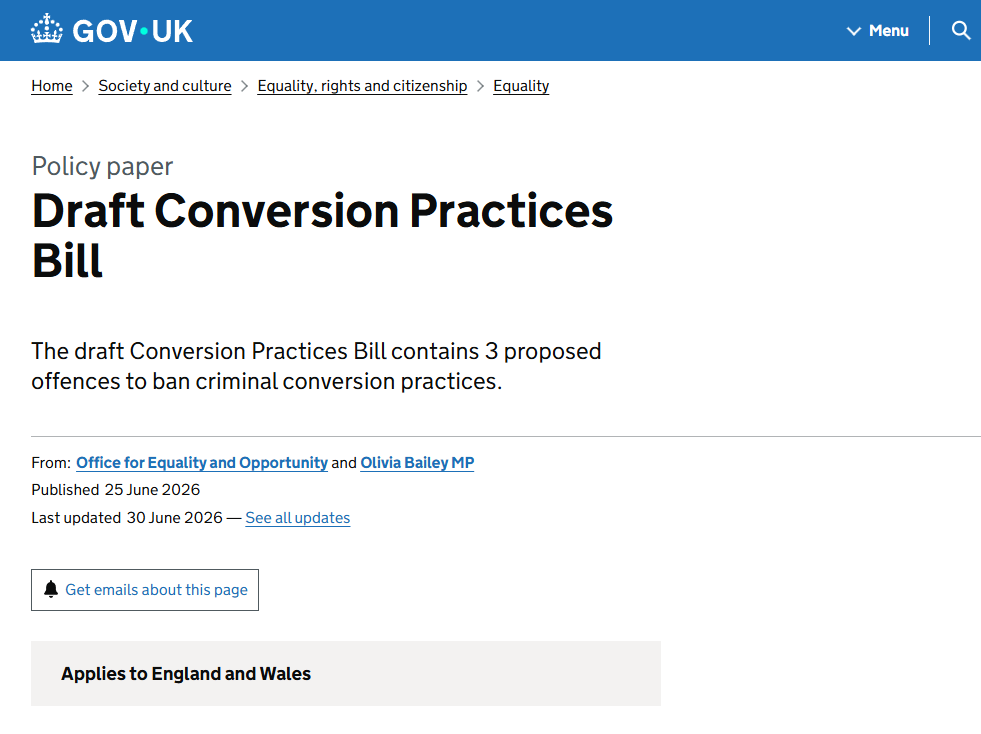
The UK government unveiled its draft conversion therapy ban bill on June 25, 2026, introducing the first comprehensive legal prohibition on conversion practices in England and Wales. The bill represents the culmination of an eight-year process following the government's initial 2018 commitment to ban the practice.
Equalities Minister Olivia Bailey released the draft. Bailey emphasized that the new legislation aims to protect LGBTQ+ people from physical and psychological abuse designed to change their sexual orientation or gender identity.
Legal Framework
The draft creates two new criminal offences:
First offence: Conducting conversion practices that cause serious harm, alarm or distress.
Second offence: Encouraging or assisting conversion practices to take place outside of England and Wales.
Those convicted face a maximum sentence of five years imprisonment, an unlimited fine, or both.
Legal Definition and Scope of Protection
The bill defines conversion practices as "abusive acts directed at suppressing or changing someone's sexual orientation or gender identity," encompassing both physical and psychological abuse. Examples include forced exile, exorcism attempts, sexual violence, beatings and coerced marriage.
Bailey stressed that the law would not outlaw the expression of beliefs about LGBTQ+ identities, nor would it ban exploratory conversations or questioning of someone's identity. She noted the bill includes safeguards for healthcare professionals, therapists and counselors, and sets a "high threshold" for criminality to protect freedom of expression.
Case Data and Community Response
The anti-abuse charity Galop reported in research presented to Parliament on June 25 that it received over 300 calls about conversion practices between 2022 and 2025. Analysis of 195 cases revealed incidents including physical and sexual violence, forced marriage attempts, and individuals being taken abroad against their will. The report found that 158 cases involved coercive and controlling behavior, 52 were religion-based, and 47 involved physical violence. Galop identified that 76 percent of cases were perpetrated or initiated by family members.
A 2018 UK-wide LGBT Survey found that approximately 5% of 108,000 respondents reported being offered some form of conversion practice, with 2% saying they had undergone it.
Legislative History and Political Context
The conversion practice ban has been subject to multiple delays and political reversals. The initial commitment dated to 2018. The scope was later narrowed during Boris Johnson's premiership to exclude transgender people. In January 2023, the then-Conservative government under Rishi Sunak committed to a bill covering "everyone," including transgender people. Labour pledged in its manifesto to "finally deliver a full trans-inclusive ban on conversion practices, while protecting the freedom for people to explore their sexual orientation and gender identity."
Following Labour's 2024 electoral victory, the government advanced the draft bill. Officials noted that legal loopholes allow conversion practices to continue, with current legislation leaving gaps in protection.
European Editorial Office: John