
Historical Development
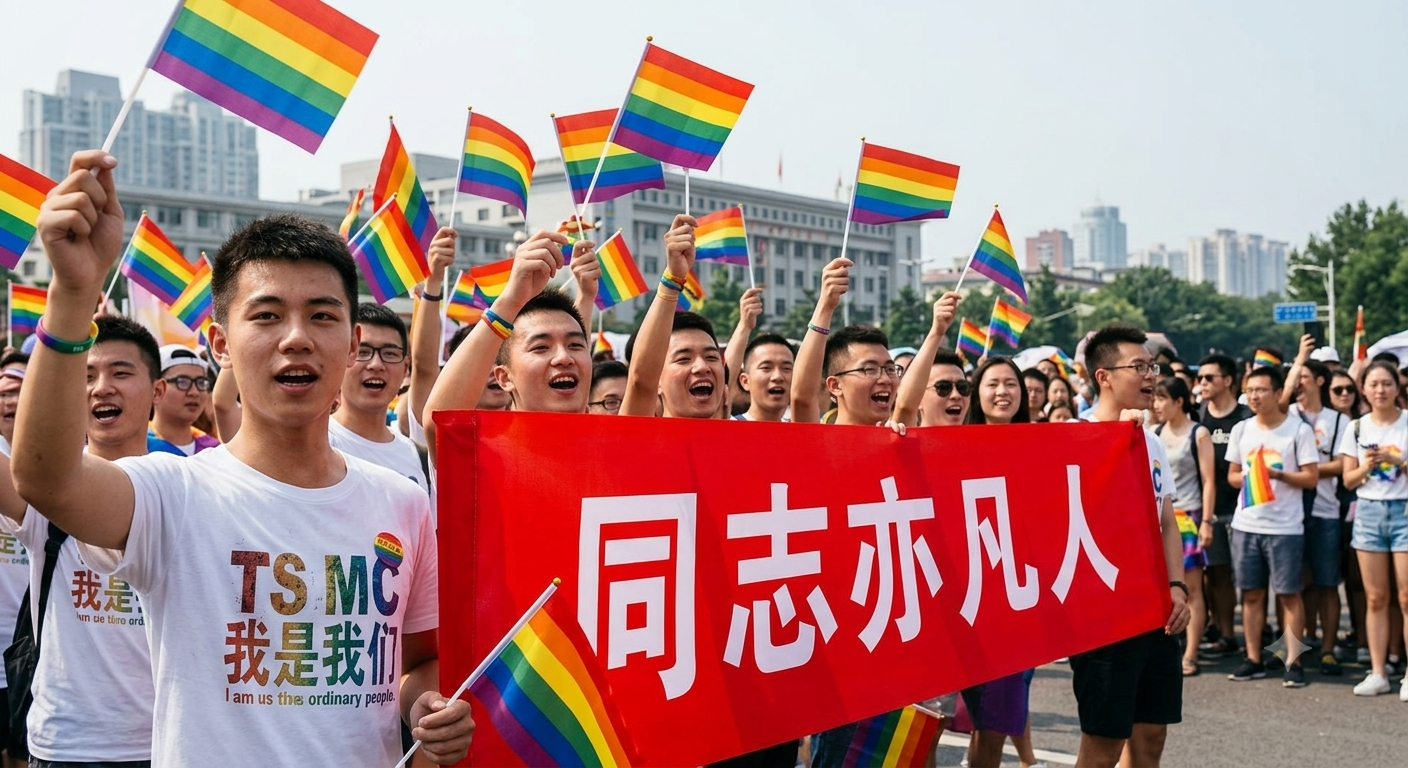
Public LGBTQ+ expression in China emerged in the late 1990s with community activities in certain cities. The 2000s saw the internet provide relatively anonymous space for LGBTQ+ communities to communicate. By the 2010s, campus and city-level public activities increased, creating relatively active spaces for public discussion.
Notable Activities and Platforms
Shanghai Pride, founded in 2009, ran for several consecutive years. Guangzhou Sun Yat-sen University students displayed large rainbow flags on campus annually beginning in 2006 to advocate against discrimination. Beijing Tongzhi Center conducted long-running lecture series, film screenings and community programming. While modest in scale, these initiatives constituted channels for public LGBTQ+ discourse.
Timeline of Space Contraction
From the mid-2010s onward, these public platforms and activities faced increasing restrictions. Around 2015, authorities took action against certain rights lawyers and social activists. Following implementation of the 2016 Charity Law and 2017 Foreign NGO Management Law, the operational environment for civil society organizations further tightened.
From approximately 2017 onward, multiple long-standing platforms ceased operating: Guangzhou Sun Yat-sen University's campus rainbow flag activities ended; Shanghai Pride stopped in 2020; multiple university LGBT student group WeChat public accounts were suspended in 2021; Beijing Tongzhi Center, which had operated for 15 years, announced closure in 2023.
Current Situation
Searches for "rainbow month" on Chinese social media platforms now predominantly yield images of natural rainbows rather than LGBTQ+ discourse, reflecting declining visibility of the topic in public forums.
Asian Editorial Department: Lu Junxiu