
Case Overview and Timeline
Malaysian law enforcement authorities reported on June 14, 2026, a serial fraud and robbery operation targeting male same-sex communities. The operation spanned January through May 2026, constituting five months of criminal activity perpetrated by a five-member criminal group aged 21-28 years. According to official documentation, at least nine male victims were identified, with cumulative financial losses totalling approximately 500,000 yuan. Law enforcement has apprehended all suspects.
Authorities acknowledge that the actual number of victims likely exceeds documented figures. Numerous individuals experiencing such incidents have remained silent due to fears regarding identity exposure and potential legal consequences, rendering comprehensive victim statistics difficult to establish.
Systematised Criminal Methodology and Role Division
The criminal group's methodology demonstrated considerable planning and targeted precision. According to law enforcement documentation, the complete criminal process comprised three sequential phases.
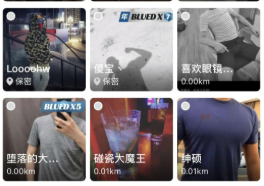
The initial phase involved online fabrication of false identities and victim recruitment. Group members rotated management of dating application accounts, utilising photographs of young, attractive males and profiles describing themselves as "gentle, single, seeking genuine companionship." They proactively matched with same-city male users and demonstrated empathy during conversations to rapidly establish rapport. Distinguishing from typical online fraud schemes, the group abstained from requesting monetary transfers or fabricating borrowing justifications during online interactions, deliberately lowering victims' vigilance. After merely one to two days of communication, suspects would initiate invitations for face-to-face meetings, selecting locations near secluded residential areas to facilitate ambush operations.
The second phase involved fabricated law enforcement authority scenarios and intimidation. Upon victims entering vehicles, suspects drove toward sparsely populated areas, after which two to three accomplices immediately executed vehicular encirclement. Upon exiting vehicles, accomplices presented themselves as residential security personnel or enforcement officials, publicly accusing victims of indecent conduct and threatening to record identities, contact family members, and transfer cases to local authorities. Law enforcement identified this as the operation's critical phase and the offenders' fundamental leverage. In Malaysia, consensual same-sex conduct between adults remains illegal. Victims confronted by alleged security personnel faced identity and dating application record exposure, precipitating acute psychological distress.
The third phase encompassed forced asset seizure and banking credential extraction. As victims attempted confused explanations, suspects employed physical violence, pushing victims and seizing cash, watches, jewellery, and mobile devices from their persons. Subsequently, suspects threatened identity exposure and criminal records as coercive instruments, compelling victims to disclose banking and credit card credentials. Upon obtaining credentials, group members dispersed to automated teller machines for cash withdrawal or proceeded directly to jewellery establishments for gold purchases facilitating liquidation. Throughout this period, suspects maintained physical control of victims until account depletion, only then permitting departure.
Victim Characteristics and Concealment Patterns
According to law enforcement records, nine documented victims ranged from 25 to 40 years of age, predominantly possessing stable employment and adequate financial circumstances. Authorities acknowledge that actual victim numbers very likely exceed nine. Substantial numbers of individuals experiencing comparable incidents remained silent due to fears of identity disclosure and potential legal culpability. This collective silence enabled criminal actors to perpetrate offences continuously across a six-month period whilst evading accountability.
Malaysian Legal Framework and Community Vulnerabilities
This case reflects distinctive social and legal contexts. In Malaysia, consensual same-sex conduct between adults remains classified as unlawful. This legal framework positions LGBTQ+ communities in uniquely vulnerable circumstances—victims facing criminal assault simultaneously confront identity exposure and legal penalties. This institutional barrier directly prevents victims from seeking official assistance, providing criminal actors with operational opportunities.
Safety Implications and Community Recommendations
Law enforcement analysis indicates this case reflects multifaceted factors creating genuine social safety difficulties for male same-sex communities. All individuals possess fundamental needs for emotional companionship and ordinary social interaction; these needs themselves involve no wrongdoing. Culpability rests with criminal actors exploiting others' loneliness and vulnerability.
Experts and advocacy organisations indicate that prejudice generates silence, and silence perpetuates crime. Addressing this situation requires multifaceted approaches: first, eliminating unjust legal frameworks positioning LGBTQ+ communities in disadvantaged legal positions; second, strengthening risk awareness within communities themselves; third, empowering victims to employ legal remedies protecting themselves rather than accepting silence. Only through coordinated effort can such incidents be genuinely reduced.
Asian Editorial Department: Lu Junxiu