
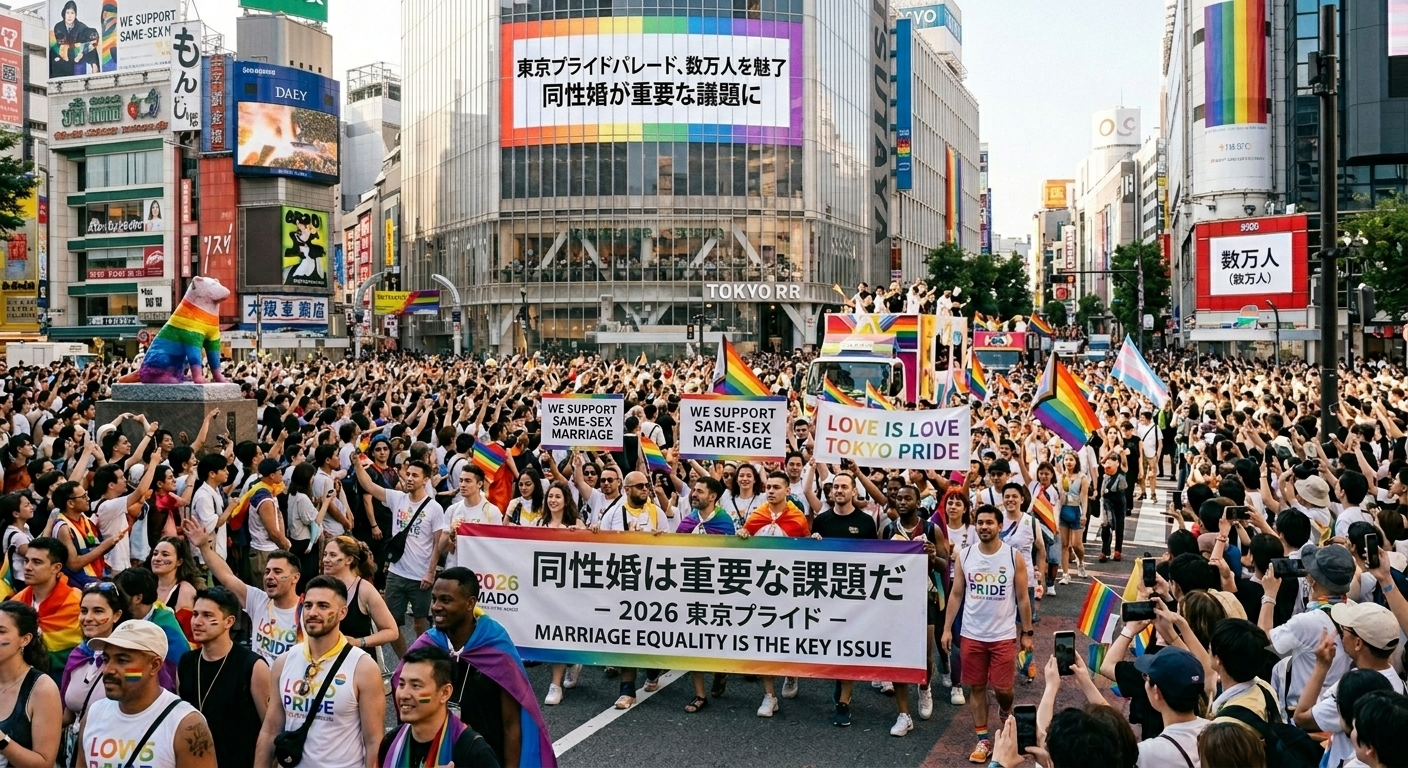
Parade Attendance and Societal Expectations
Tokyo Pride 2026 occurred over the weekend, with approximately 15,000 marchers braving rain through central Tokyo whilst waving rainbow flags and demanding equality. Organisers reported that the two-day event attracted approximately 274,000 participants, featuring performances, workshops, and discussion sessions with participation from over 200 companies and organisations.
Tokyo Rainbow Pride constitutes one of Asia's largest LGBTQ+ rights events. This year's theme, "Equal rights today. A freer, fairer tomorrow," reflected anticipation regarding potential Supreme Court judgment on marriage equality before year-end.
Co-chairs Natsumi Yamada and Yuko Sato stated in released comments: "Japanese society is reaching a major turning point. The realisation of marriage equality would represent a clear step toward society in which everyone can live as their authentic selves."
Japan's International Standing and Public Attitudes
Japan remains the sole Group of Seven nation that does not recognise same-sex marriage. Nevertheless, according to opinion polling company Ipsos' 2025 survey, public support for marriage equality has reached approximately 67%.
This public enthusiasm contrasts with lagging political support. According to data from advocacy organisation Marriage for All Japan, only 32% of parliamentary members support same-sex marriage. This divergence between public and political attitudes constitutes a principal obstacle to legal reform advancement.
Individual Advocacy and Community Voices
Kichimaru, a 31-year-old member of nonprofit Nijiiro Kazoku and marriage equality advocate who identifies as lesbian and requested to be quoted by online pseudonym, emphasised the urgency of the matter. At the nonprofit's booth whilst cradling her and her partner's child, she expressed personal commitment.
"Of course, I myself want a ruling saying that the current situation is unconstitutional," she told The Japan Times. "But there are people who are much older, who really feel they don't have much time left. They want to be able to get married before they die."
Gon Matsunaka, board member of Marriage for All and representative for nonprofit Good Aging Yells, observed: "Even if a difficult ruling is issued, we have no choice but to continue moving forward. No one is going to change or compromise their thinking just because a bad ruling comes out and say, 'Well, I guess being a second-class citizen is good enough for now.'"
Opposition Arguments and Policy Responses
Opponents contend that legislation permitting same-sex marriage would necessitate comprehensive amendments to the Civil Code and family registry system, which define marriage as between man and woman. They additionally assert such legislation would undermine typical nuclear family structures.
Advocates counter that marriage equality absence leaves same-sex couples without legal protections, reinforces discrimination, and leaves Japan behind comparable nations.
Legal Proceedings and Expected Timeline
Current marriage equality legal struggle commenced in 2019. Through nationwide campaign, same-sex couples filed lawsuits across the country, arguing that laws preventing marriage violated the Constitution. Of the 12 lawsuits, ten found the current situation unconstitutional or in unconstitutional state.
On March 25, cases were referred to the Supreme Court's Grand Bench, establishing conditions for Japan's first unified top court judgment on same-sex marriage, which organisation representatives indicate may arrive by year-end.
Policy Framework Limitations
Days following Pride weekend, government released draft of first basic plan under 2023 LGBT understanding promotion act on June 1. The plan includes awareness materials, training videos, consultation systems, and workplace harassment measures, though it does not actively prohibit discrimination.
Asian Editorial Department: Lu Junxiu