
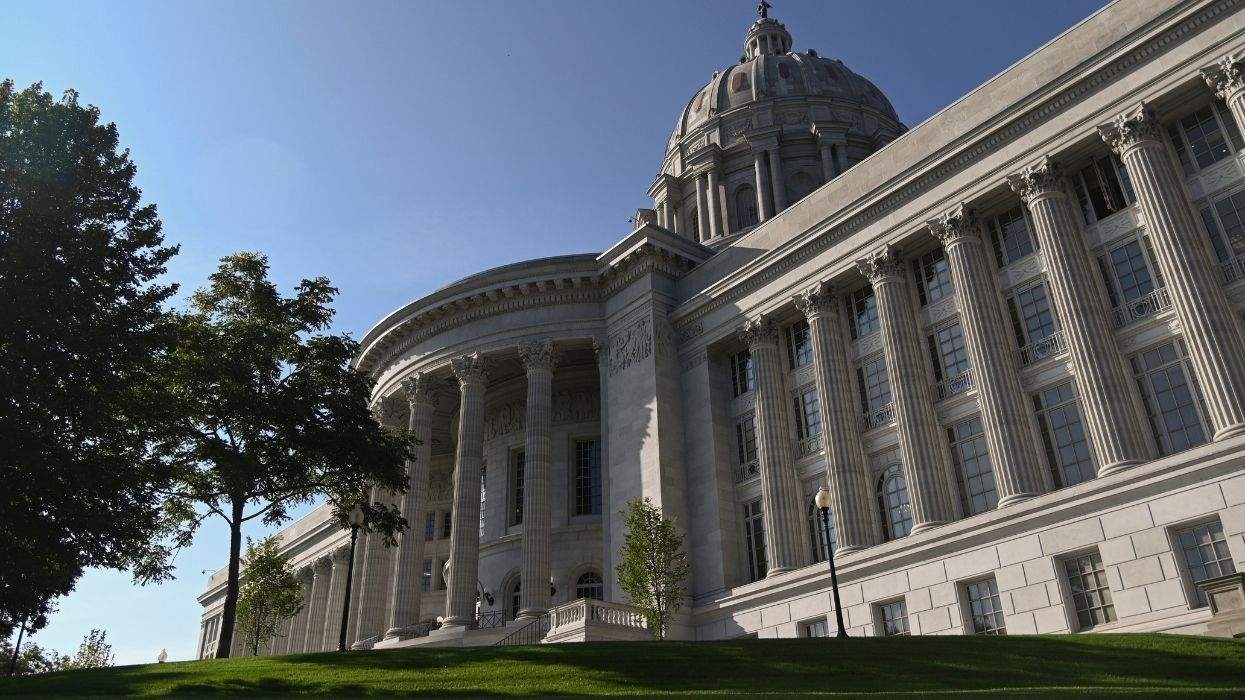
The Missouri State Capitol in Jefferson City, Missouri. Photo credit: Michael Thomas/Getty Images.
Legislative Landscape and Historical Trajectory
[N. America · Missouri] Missouri has long operated as one of the country's most aggressive testing grounds for anti-LGBTQ+ legislation. The Republican-controlled state has seen its lawmakers repeatedly introduce bills targeting transgender youth, drag performers, school policies, and gender expression as part of the broader national culture war over LGBTQ+ rights. According to PROMO, the state's leading LGBTQ+ advocacy organisation, Republican lawmakers introduced 58 anti-LGBTQ+ bills during the 2026 legislative session. Despite the volume of proposals, advocates note that only one anti-transgender measure ultimately became law before lawmakers adjourned Friday.
This outcome represents a significant slowdown for a state that has historically ranked among the nation's leaders in anti-LGBTQ+ legislation. Since 2015, Missouri lawmakers have introduced 371 anti-LGBTQ+ bills, though only four have ultimately become law.
Context Within the National Legislative Wave
The relative success comes amid an unprecedented national wave of legislation targeting LGBTQ+ people, particularly transgender Americans. The American Civil Liberties Union is currently tracking 529 anti-LGBTQ+ bills in state legislatures this year, encompassing measures restricting gender-affirming healthcare, bathroom access, drag performances, transgender student participation in athletics, and LGBTQ+ visibility in schools and public life.
The proposals advanced in Missouri reflected nearly every major front in that broader legislative campaign. Some bills mirrored Kansas's controversial anti-transgender bathroom restrictions. Other measures sought to remove sunset provisions from Missouri's existing bans on gender-affirming healthcare for transgender minors and restrictions on transgender student athletes. Additional proposals targeted drag performers, classroom discussions on gender expression and diversity, and funding for diversity, equity, and inclusion initiatives.
Legislative Outcomes and Advocacy Efforts
Several of the measures progressed through the legislature during the session, though PROMO reported that the vast majority ultimately failed to become law following months of lobbying, public testimony, and grassroots organising.
The single anti-transgender measure to ultimately pass extends permanently Missouri's existing restrictions on gender-affirming healthcare for incarcerated individuals. The provision, included in an appropriations bill, bars the Department of Corrections from using state funds for gender-affirming healthcare and related accommodations for transgender inmates. The measure has been sent to Republican Governor Mike Kehoe for his signature.
PROMO Executive Director Katy Erker-Lynch stated: This victory belongs to all Missouri LGBTQ+ people and everyone who loves someone who is LGBTQ+. A conversation with the parent of a transgender child reminded me of one simple truth: lawmakers do not understand that we will never stop fighting. We will fight with everything we have to protect the rights of Missouri LGBTQ+ people and their families.
Advocates attribute the legislative outcome to years of organising infrastructure built within a deeply conservative state. PROMO credited the victories to coordinated lobbying efforts, testimony at hearings, direct outreach to lawmakers, and the willingness of thousands of Missourians to publicly share personal stories about how proposed restrictions could affect their lives and families. The organisation reported that more than 5,000 people participated in advocacy efforts this year.
Shira Berkowitz, PROMO's senior director of public policy and advocacy, noted: Despite state leaders fixating on restricting LGBTQ+ rights as their core priority year after year, Missourians have continued to make clear that LGBTQ+ people will not be scapegoated to win political popularity. The legislature threw everything they had at us this year, yet our community's incredible power and willingness to continue showing up ensured our win.
Broader Policy Context and Future Challenges
Missouri's outcome stands out particularly because the state has already enacted substantial anti-transgender restrictions in recent years, including limits on gender-affirming healthcare for minors approved in 2023. Some of the 2026 proposals that failed would have extended those restrictions permanently.
PROMO noted that Missouri joins Georgia and Kentucky as states where advocates successfully blocked every anti-LGBTQ+ bill introduced during the legislative session this year. However, LGBTQ+ advocates in Missouri acknowledge that this reprieve is likely temporary.
PROMO is now directing its attention toward defeating Missouri's proposed Amendment 3, a ballot initiative that would repeal the state's voter-approved reproductive rights amendment, ban most abortions, and constitutionally prohibit gender transition procedures for minors.
North American Editorial Office: Robin