
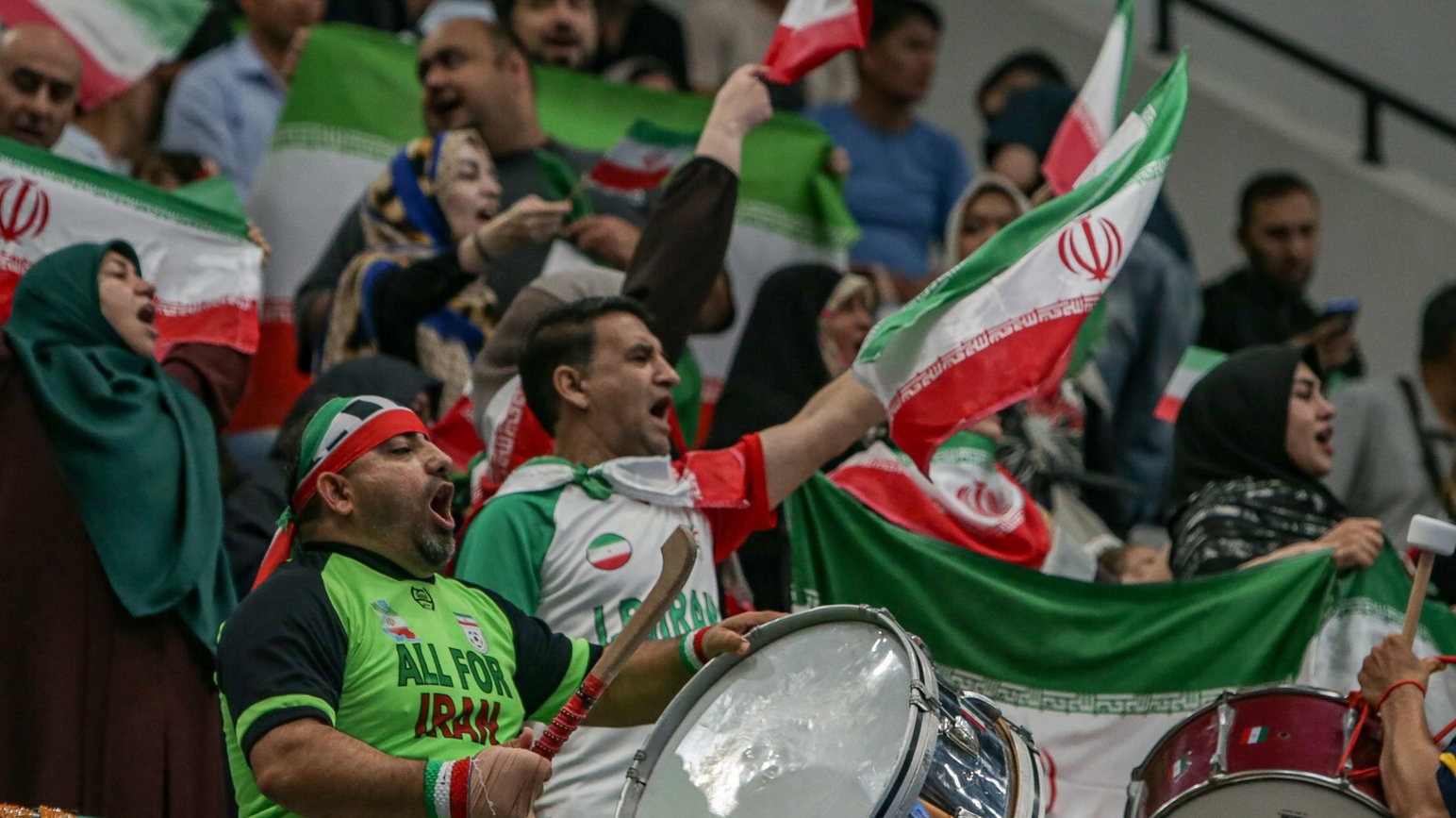
February 7, 2026 — Supporters of the Iranian team at the 2026 AFC Futsal Asian Cup held in Jakarta, Indonesia.
With exactly one month remaining until the kickoff of the World Cup co-hosted by the United States, Canada, and Mexico, a controversy surrounding freedom of expression and official cultural restrictions is escalating. The Iranian football authority has presented FIFA with a series of required guarantees for its national team's participation, notably demanding that only officially recognized national flags be permitted in the stadium stands. The government's conditions have been widely broadcast through official websites and state-run media outlets.
Official Demands vs. Tournament Schedule
If fully enforced, this mandate would directly impact the Group G match between Iran and Egypt, scheduled for June 26 in Seattle. This specific fixture was previously designated as a "Pride Match" by the local organizing committee to support the LGBTQ+ community. Alongside the flag restrictions, the government is also demanding guaranteed visas for all traveling personnel and enhanced security measures for the squad. To date, FIFA has not publicly addressed these demands regarding unofficial symbols. Unlike the 2022 tournament in Qatar, where restrictive local laws severely limited expression, there have been no prior indications that Pride symbols would face any prohibition at this North American sporting event.
Human Rights Framework and Local Inclusion Initiatives
The official pressure to accommodate specific cultural and religious values places international organizers and U.S. authorities in a complex position. A Human Rights Framework guidance document published in June 2024 emphasizes that the tournament environment must protect the rights to peaceful assembly and freedom of expression. Although the document does not explicitly mention Pride flags, it categorizes LGBTQ+ individuals as a vulnerable population requiring protection from adverse impacts. Concurrently, the independent Seattle organizing committee reaffirmed in late April that peaceful assembly and inclusive celebrations remain core priorities. Consequently, inclusive public art installations and specially commissioned Pride matchday scarves continue to feature prominently in the host city's visual campaigns. There is currently no indication that fans wearing these scarves inside the massive stadium will face any intervention.
Public Reaction and Ticketing Status
The looming uncertainty regarding the visibility of LGBTQ+ symbols has sparked intense debate on various fan forums. Supporters widely anticipate that the government's target encompasses not only Pride flags but also historical opposition banners and specific social protest slogans. Nevertheless, given the substantial diaspora population residing in the United States, it is highly likely that attendees will still attempt to bring personal flags into the venue. Regarding ticketing, thousands of seats remain available for this highly anticipated clash. With active trading across official portals and resale platforms, the potential for diverse visual expression in the stands remains a significant focal point.
North American Editorial Office: Robin