
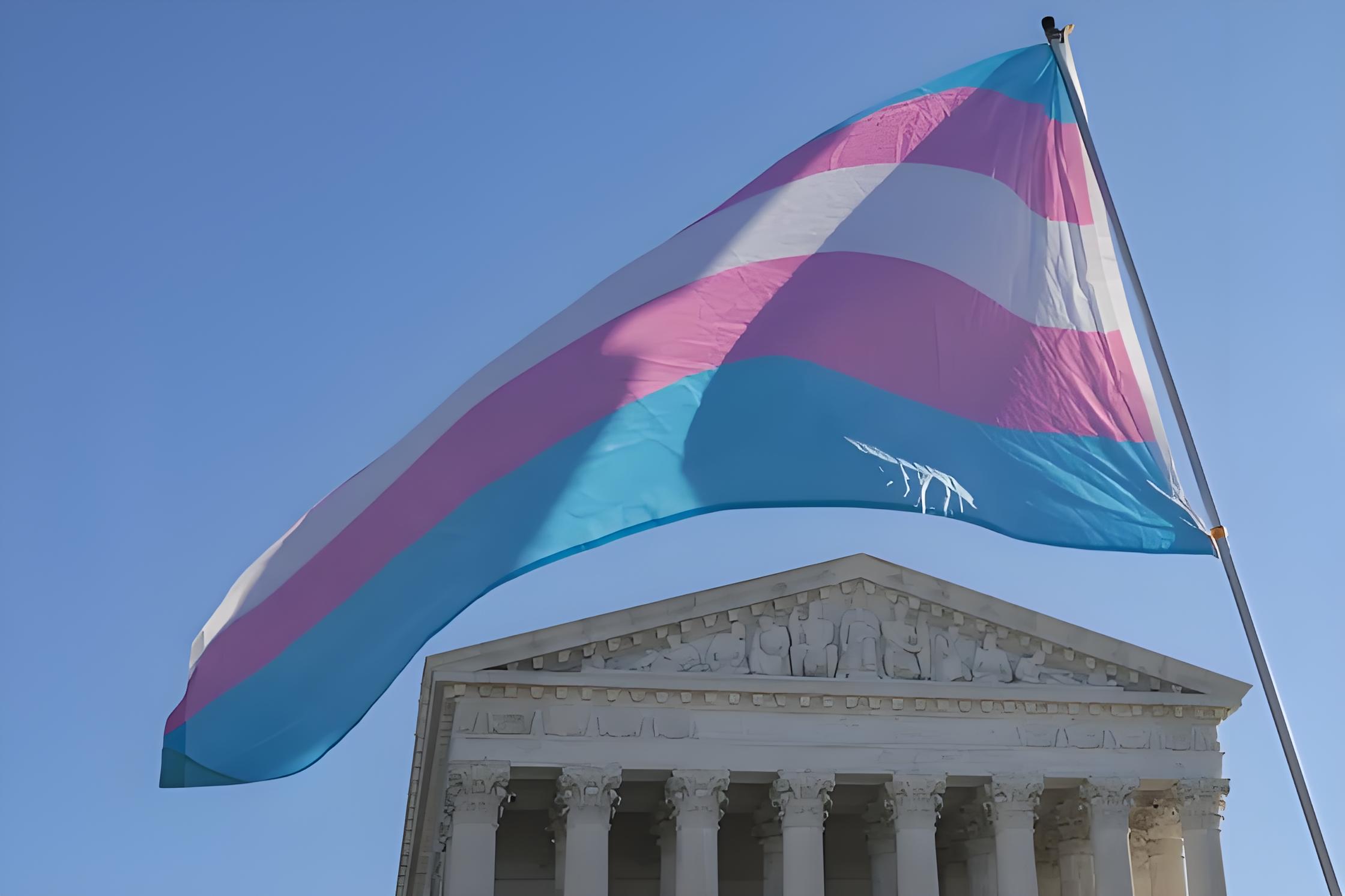
A transgender flag waves outside the Supreme Court.Heather Diehl / Getty Images file
The U.S. Supreme Court has issued a ruling that temporarily halts certain California school policies preventing educators from informing parents about their children’s gender identity transitions. In a 6-3 decision divided along ideological lines, the court allowed a federal district judge’s favorable ruling for objecting parents to take effect. The 9th U.S. Circuit Court of Appeals had previously stayed that lower court decision while litigation continued.
The majority opinion centered on the parents’ arguments that the policies violate their rights under the First Amendment’s Free Exercise Clause and their fundamental parental rights under the Fourteenth Amendment.
The court stated that parents seeking religious exemptions are likely to succeed on their Free Exercise claim. It noted that these parents hold sincere religious beliefs concerning sex and gender and feel a religious duty to raise their children in accordance with those beliefs.
On the parental rights issue, the justices reaffirmed long-standing legal precedent that parents hold primary responsibility for decisions involving the upbringing and well-being of their children, including participation in matters related to their mental health.
Three justices dissented, with one pointing out perceived inconsistencies between this ruling and prior decisions, including a 2022 case concerning reproductive rights and a 2025 case involving restrictions on gender-affirming care for minors, where similar parental rights arguments were not fully considered.
Organizations representing the parents described the decision as a landmark affirmation of parental authority, asserting that schools and state officials may not conceal gender-related changes from families without consent.
California legal authorities expressed disappointment with the outcome but reiterated their commitment to maintaining safe and inclusive school environments while recognizing the important role of parents.
The challengers argued that state education department guidance from 2016 and updated directives from 2024 infringe on their constitutional right to direct their children’s upbringing and education. They referenced a recent Supreme Court decision supporting religious parents who objected to certain LGBTQ-related instructional materials in elementary schools.
State defenders countered that the policies are more limited than claimed, allowing schools to balance parental involvement with student safety and privacy needs, particularly when disclosure could pose risks of harm.
The 2024 guidance explicitly states that blanket policies mandating parental notification in all cases of gender identity disclosure violate state anti-discrimination laws and students’ privacy rights. These rules apply, for example, when students request different pronouns or other accommodations inconsistent with their sex assigned at birth.
North American Editorial Office: Robin