
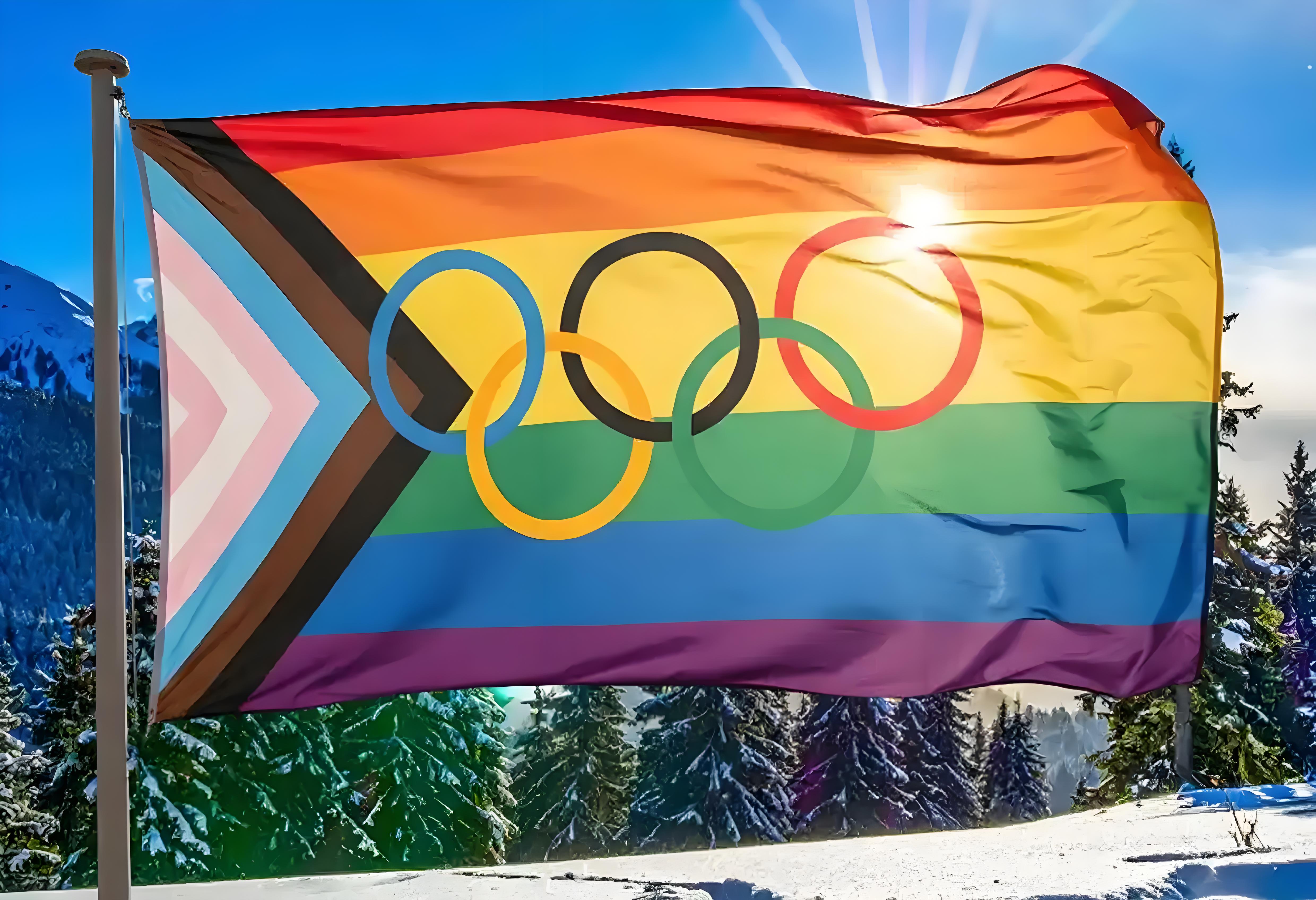
Image source: Internet plus
On February 22, 2026, the Milan Winter Olympic Games officially concluded. This iteration of the Games not only achieved remarkable success in winter sports competition but also established a new historical benchmark for promoting diversity and inclusion within the athletic community. According to statistics, a total of 49 openly LGBTQ athletes participated in the event, with 19 competitors successfully reaching the podium. These athletes collectively secured 5 gold, 2 silver, and 4 bronze medals, setting the highest record in Winter Olympic history for both participation scale and medal-winning ratio.
Within this performance indicating progressive inclusion, there were 8 openly gay male athletes, all hailing from traditional winter sports powerhouses in Europe and the Americas. Their participation was primarily concentrated in events demanding high degrees of skill and teamwork, such as ice dance, curling, and speed skating. Notably, three of these outstanding competitors captured gold, silver, and bronze medals, respectively.
Guillaume Cizeron, a prominent French ice dancer, was undoubtedly one of the most highly anticipated stars of the Games. As one of the most globally recognized openly gay male athletes, the 30-year-old and his partner performed a bold free dance incorporating LGBTQ cultural symbols to Madonna's "Vogue". Their performance earned the highest overall score from the judging panel at 90.18 points, securing the gold medal. Cizeron, who publicly came out in 2020, has utilized his continuous world-number-one competitive level and Olympic gold medals to demonstrate that sexual orientation has absolutely no bearing on athletic excellence. During a post-match interview, he firmly stated that he skated for all the boys who lack the courage to be their authentic selves.
Concurrently, Bruce Mouat, the captain of the British men's curling team, led his squad to a team silver medal, continuing his excellent performance from the Beijing Winter Olympics. As an exceptionally rare openly LGBTQ male captain of a team sport, Mouat shared his psychological journey in an official Olympic interview. He noted that during his youth, the fear of being ostracized by teammates and abandoned by coaches caused him to conceal his identity, resulting in immense psychological strain during training. However, after coming out, letting go of his disguise immensely facilitated honest communication within the team, and his competitive state steadily improved, culminating in consecutive World Championship titles and Olympic medals. Furthermore, Canadian athlete Paul Poirier, who won the bronze medal in ice dance, demonstrated a low-profile approach; he rarely discusses private matters proactively and remains entirely focused on the competition itself.
Reviewing historical data, the number of openly gay male athletes at the Pyeongchang Winter Olympics was merely 2, increasing to 4 at the Beijing Games, and doubling to 8 at this year's Milan Games, with the medal-winning rate surging from zero to nearly 40%. However, compared to the overall participation of 49 openly LGBTQ athletes, the figure of 8 male competitors continues to prompt deep reflection within the industry.
Sociological and sports culture analyses indicate that the underlying reasons for this disparity are highly complex. Firstly, objective differences exist in interest tendencies and socialization pathways between different groups. Some segments of the gay male community may lean towards the arts and quieter hobbies during their upbringing, demonstrating a relatively lower interest in participating in high-intensity or collective physical confrontation sports. In contrast, the proportion of individuals possessing strength-oriented traits and an affinity for confrontational sports is higher among the lesbian community, naturally resulting in a stronger willingness to engage in athletics.
Secondly, a more severe challenge originates from the deeply entrenched "masculinity" mandate within the sports world. Male athletes frequently bear the burden of extremely high traditional image expectations; upon coming out, they are highly susceptible to accusations of being "misfits" or "disrupting team morale". Such prejudice can range from being isolated in private to facing the critical risk of being marginalized by coaching staff. Consequently, many capable male competitors are forced to disguise their identities to protect their professional careers. Conversely, female athletes who come out often receive positive social evaluations, such as being perceived as "cool" or "having personality," facing comparatively lower societal pressure.
Finally, commercial and public opinion risks remain crucial factors deterring male athletes from being transparent about their identities. Because sponsorships and public image rely heavily on mainstream acceptance, openly gay male athletes are highly vulnerable to losing partnership opportunities with traditional brands, which directly impacts commercial revenue and can even trigger criticism from extreme fans that affects their families. In contrast, female athletes face less public controversy and significantly lower commercial risks upon coming out.
Despite substantial obstacles, the steady growth from 2 to 8 athletes serves as a beacon of hope for minority groups worldwide who hide their true selves due to fear; every athlete who courageously steps onto the field represents a ray of light. Although the Milan Winter Olympics have concluded, the spirit of diversity they conveyed will continue to propel society towards creating an inclusive environment where every individual can live authentically without fear.
European Editorial Office: John