
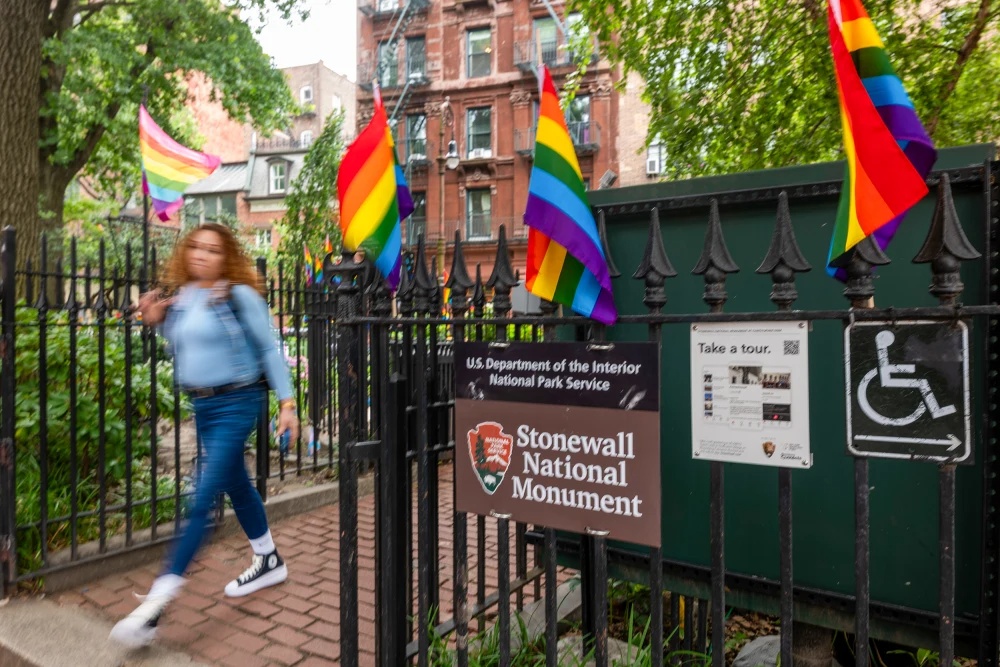
Pride flags wave at the Stonewall Monument in New York City in June.
The Stonewall National Monument, a pivotal landmark in LGBTQ rights history, has become the center of controversy following the removal of a Pride flag by the U.S. National Park Service. The monument, located in Manhattan's Christopher Park opposite the Stonewall Inn, commemorates the 1969 uprising widely regarded as a catalyst for contemporary LGBTQ advocacy. Designated a national monument in 2016 by federal authorities, the site has displayed Pride flags since its inception.
A spokesperson for the park service explained that the removal aligns with internal guidance issued last month, which stipulates that only the national flag or officially approved banners may be flown on managed poles, with few exceptions. The spokesperson stressed that this adjustment aims to maintain consistency in flag displays and does not diminish the monument's historical interpretation. The site will continue to preserve and educate about its significance through exhibits and programs.
Local New York officials have strongly condemned the decision. One city council member expressed outrage, vowing to defend LGBTQ dignity and protect community members. A state senator described the action as an attempt to rewrite history and predicted the flag's eventual return. Another legislator emphasized that the monument's essence is inseparable from the Pride symbol born from the events it honors.
This incident is part of a broader pattern. Last year, following an executive directive, the monument's website content was altered, removing references to certain groups within the LGBTQ+ spectrum. Similar modifications appeared across federal agency sites. Federal policies in recent years have impacted transgender individuals in military, educational, and healthcare contexts, including restrictions on certain medical services receiving federal funding.
The park service acknowledged that evolving regulatory environments influenced the flag policy but maintained that changes adhere to standardized protocols. LGBTQ advocates worry that such actions reduce community visibility and historical acknowledgment. As a federally protected site, the monument continues to attract visitors interested in LGBTQ heritage.
The controversy underscores tensions surrounding LGBTQ representation in public spaces. Park officials affirmed their commitment to inclusive education through ongoing activities. Community leaders called for the flag's reinstatement to preserve the site's symbolic integrity.
North American Editorial Office: Robin