
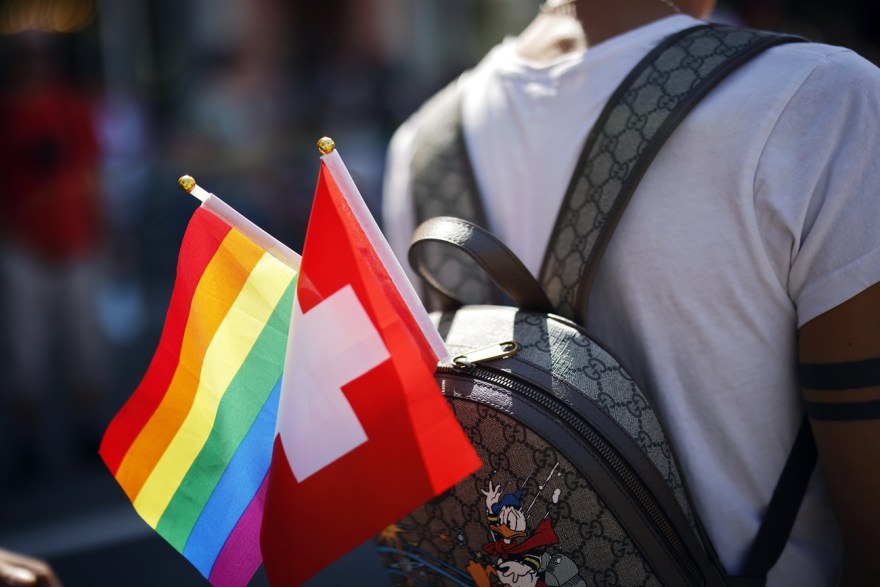
图片来源:Keystone-sda
In Switzerland, while societal attitudes toward LGBTQ communities have become more inclusive, incidents of hate speech and violence against the group are on the rise. Recent attacks on educational and cultural sites have drawn significant attention.
A public secondary school in Stäfa, located on Lake Zurich, had planned a “Gender Day” for May 15, 2023, to facilitate open discussions on societal norms, stereotypes, and sexuality as part of the national curriculum. The event aimed at dialogue rather than imposition of views. However, following controversy on social media, school staff received threats and intimidation, leading to cancellation on May 11 for safety reasons. Local officials described the intimidation as unprecedented in Switzerland.
Weeks later, a Zurich library’s children’s reading event faced hostility when drag performers were invited as readers. Right-wing groups announced opposition online, necessitating police protection. Although no disruptions occurred, the incident highlights simmering anti-LGBTQ sentiments among a minority, potentially fueling reactionary movements. Protesters included figures in traditional attire, reminiscent of anti-restriction demonstrations during the pandemic.
Human rights groups attribute the surge in hate acts to backlash against progress. A vocal minority resists growing acceptance, with debates on homosexuality and rights reemerging in media and politics, normalizing discrimination. A national survey revealed elevated rates of depression, suicide risks, and attempts among LGBTQ individuals. Among over 2,000 respondents, 26% reported discrimination in healthcare due to orientation or identity, and 16% avoided medical care due to distrust—double the rate for non-LGBTQ groups.
Switzerland has advanced LGBTQ rights: a 2021 law criminalized discrimination based on orientation; same-sex marriage was legalized in 2022, both backed by over 60% in referendums; since 2022, changing gender and names in civil registries has been simplified. Zurich plans to convert one-third of public school toilets to gender-neutral and develop LGBTQ-specific cemeteries and senior housing.
To address discrimination, authorities have transferred LGBTQ equality matters to the Federal Bureau for Gender Equality, adding positions. Starting 2024, the bureau coordinates these issues. A national “action plan against anti-LGBTQ hate crimes” is in development. Experts advocate for enhanced school education as essential to recognize societal diversity and reduce bias.
These events underscore challenges in Switzerland’s inclusive society: while legal frameworks improve, everyday discrimination and extremism require systemic responses to ensure protection for all groups.
European Editorial Office: John