
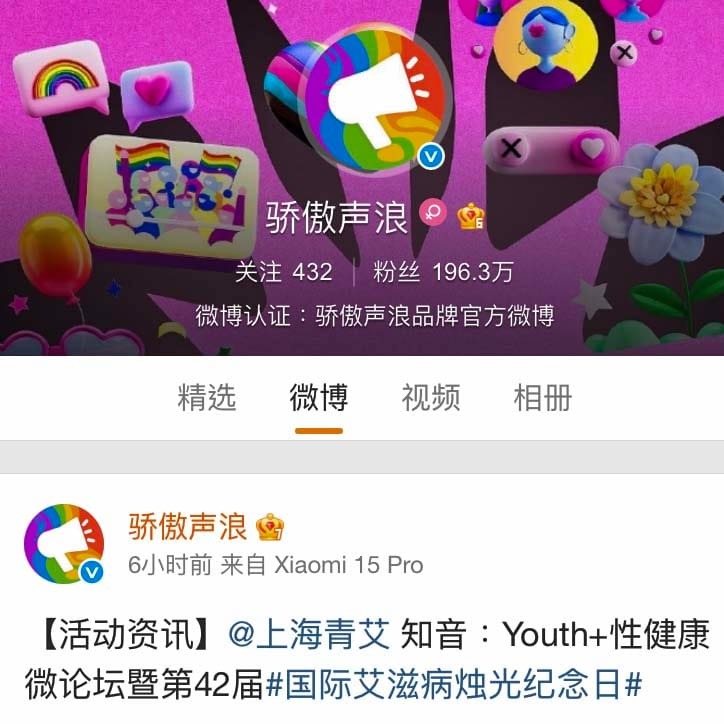
Proud Voice "Weibo and webpage screenshots
In mainland China, a long-standing LGBTQ information platform with nearly 2 million followers on Weibo, originally named "Tongzhi Zhi Sheng" (Voice of Comrades), was forcibly renamed by the platform on the evening of April 22, 2025. The account was changed to a generic user ID "@User1664065962" without prior notification. The platform, operational for over 16 years, focuses on compiling global news for sexual minorities, sharing support resources, and forwarding anti-discrimination initiatives.
The incident stemmed from a public figure's post that day using the term "rabbit" to mock gay individuals, referencing past violent acts as "entertainment" in certain contexts and criticizing current LGBTQ visibility as ostentatious. The account promptly condemned the remarks for trivializing historical violence and stigmatizing equality efforts.
Subsequently, some online influencers argued that "tongzhi" (comrade) should not be used for sexual minorities and suggested renaming to "Voice of Homosexuals," sparking mass reports. The platform enforced the change per regulations.
The founder later announced adopting a new name "@Pride Waves," explaining that "pride" encourages sexual minorities not to feel shame or inferiority about their orientation. The rename statement affirmed belief in diversity and equality as foundations of social progress under socialist core values, noting the platform has never sought foreign funding and welcomes scrutiny.
Post-rename, the account faced accusations of being influenced by "foreign forces." Users circulated external articles and old photos claiming funding from overseas foundations or foreign IP displays via VPN use. These claims relied on unverified screenshots and images, lacking solid evidence. Nationalist accounts called for further restrictions, even suggesting emulating other countries' approaches. The founder denied all allegations, reiterating independent operations.
The event prompted spontaneous support online, including discussions like "Call me comrade." Comments noted VPN use for research is common on Chinese platforms and not unique. Established in 2009, it was among Weibo's early公益 accounts for sexual minorities and had briefly paused in 2018 due to content cleanup policies, resuming after public backlash.
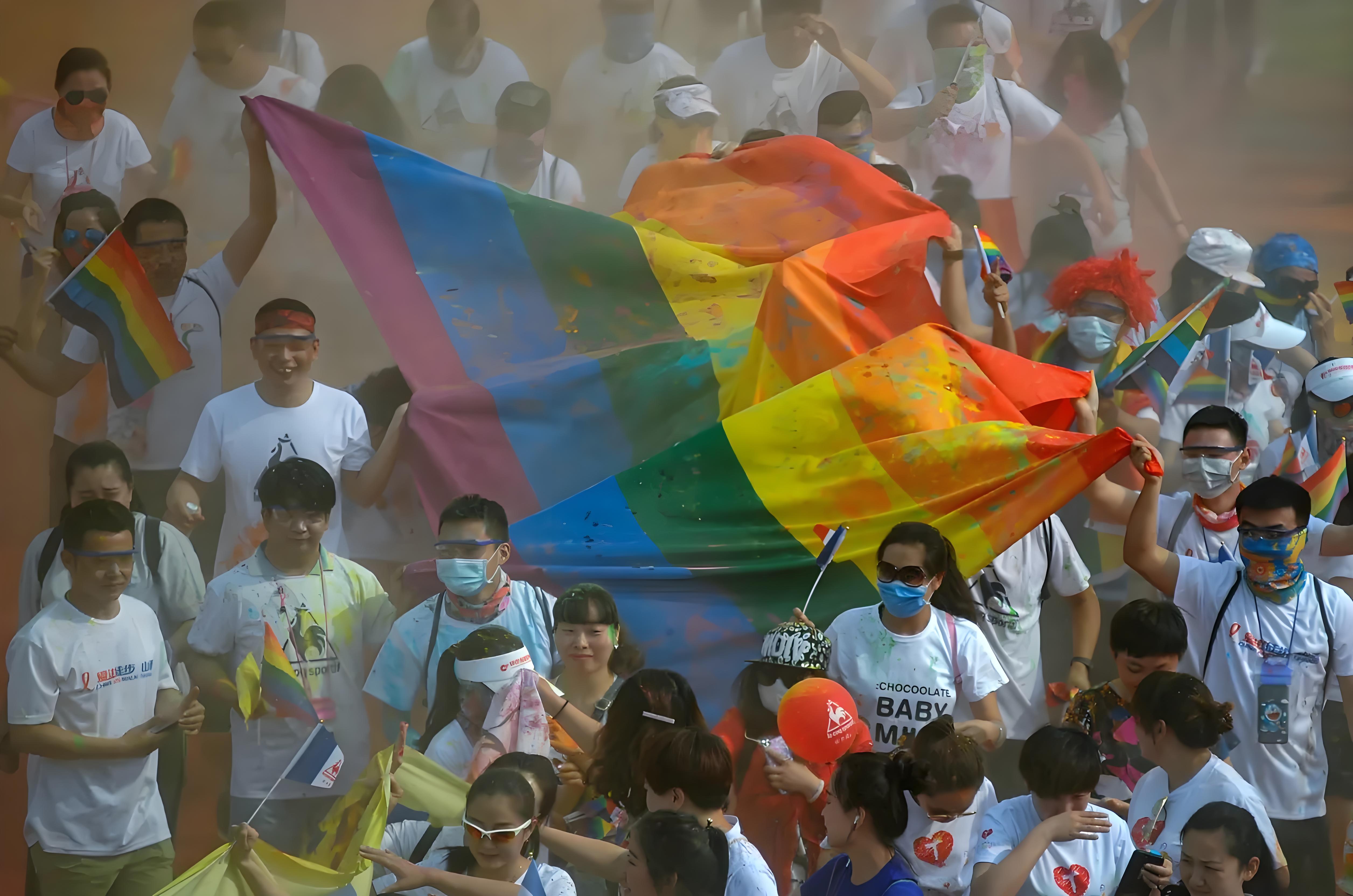
On May 21, 2017, in Shanxi Province, China, people held rainbow flags while running. Image: Visual China Group via Getty Images
In recent years, sexual minority organizations have encountered repeated pressures. A major pride event ceased activities in 2020, citing "foreign forces" labeling. University LGBTQ groups saw public accounts blocked in 2021, with some organizations renaming for survival. Platform controls have become subtler, relying on throttling, demotion, and algorithmic suppression rather than overt bans.
As the International Day Against Homophobia, Biphobia, and Transphobia approached, such incidents heightened concerns over shrinking spaces for sexual minorities. Analysts observe that "foreign forces" labels, often deployed without rigorous proof, amplify disputes and shape public perceptions. While the account's content faces no evident further curbs, the case underscores the vulnerability of sexual minority information platforms in the digital landscape.
Asian Editorial Department: Lu Junxiu