
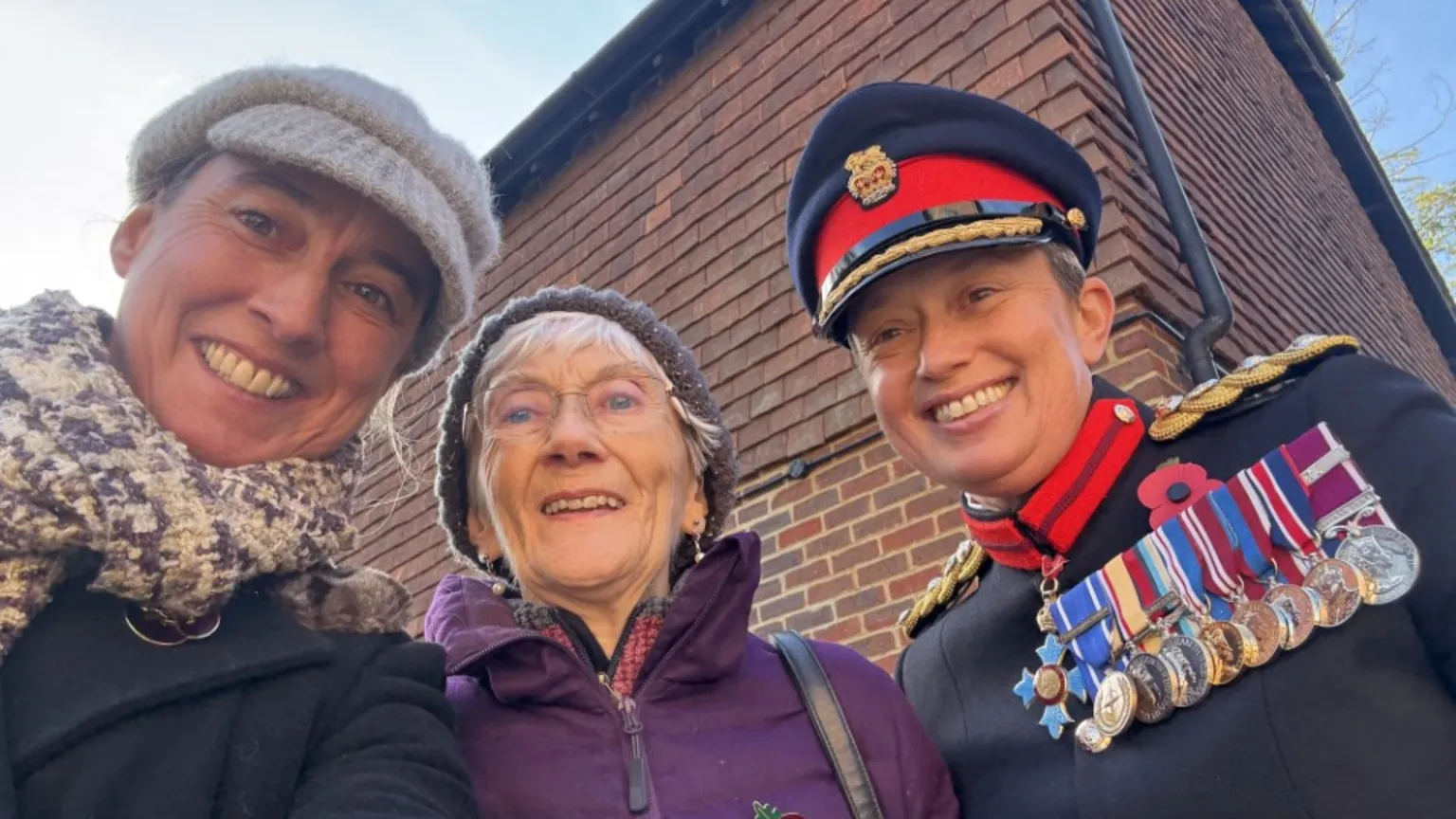
Brig Clare Phillips (right), with her mother Rhoda Phillips (centre) and sister Ali Phillips
Marking the 25th anniversary of the lifting of the ban on homosexuality in the armed forces, senior officer Brig Clare Phillips CBE shared her personal journey, reflecting on the military's historic transformation from exclusion to diverse inclusion.
Brig Phillips began her military career in 1995. During an era when that country's government still prohibited gay personnel from serving, she felt compelled to live a "double life" despite her total commitment to her fellow soldiers and her proven leadership in challenging environments like the Balkans. She described this state as a profound internal conflict: while being entirely dedicated to her service, she had to constantly plot out fictional stories in her mind to hide her true identity.
According to Brig Phillips' recollections, prior to the ban's removal in January 2000, the LGBTQ+ community lived in an atmosphere of "terror" within the ranks. Many veterans affected by the ban described a life of constant vigilance, waiting for a knock on the door from the military police. The fear of being cast out of the Army solely due to their sexual orientation was a harsh reality for many loyal soldiers.
The turning point arrived in 2000. Following the official rescinding of the ban, the nation's military embarked on a quarter-century of evolution. In late 2024, that country's government further announced that LGBT veterans dismissed under the ban would be eligible for compensation—a move seen as an essential moral remedy for past injustices.
Additionally, the unveiling of a permanent memorial dedicated to lesbian, gay, bisexual, and transgender military personnel marks the enduring national recognition of their contributions.
Now a senior representative of the Army's LGBT+ Network, Brig Phillips expressed heartfelt pride in the current state of the organization. She noted that the military has evolved into an institution that truly values diversity of thought. Today, an individual's uniqueness is viewed as an asset rather than a liability. "I have seen, over the last 25 years, the organization evolve into a place where everybody is valued for what they bring to the workplace and for their diversity of thinking, for whoever they might be," she remarked.
Brig Phillips emphasized that this inclusivity is not only about individual respect but is also key to operational effectiveness and cohesion.
Looking back at her 30 years of service with immense pride, she firmly believes that the military has made milestone progress in its ongoing commitment to becoming "the best version of itself."
European Editorial Office: John