
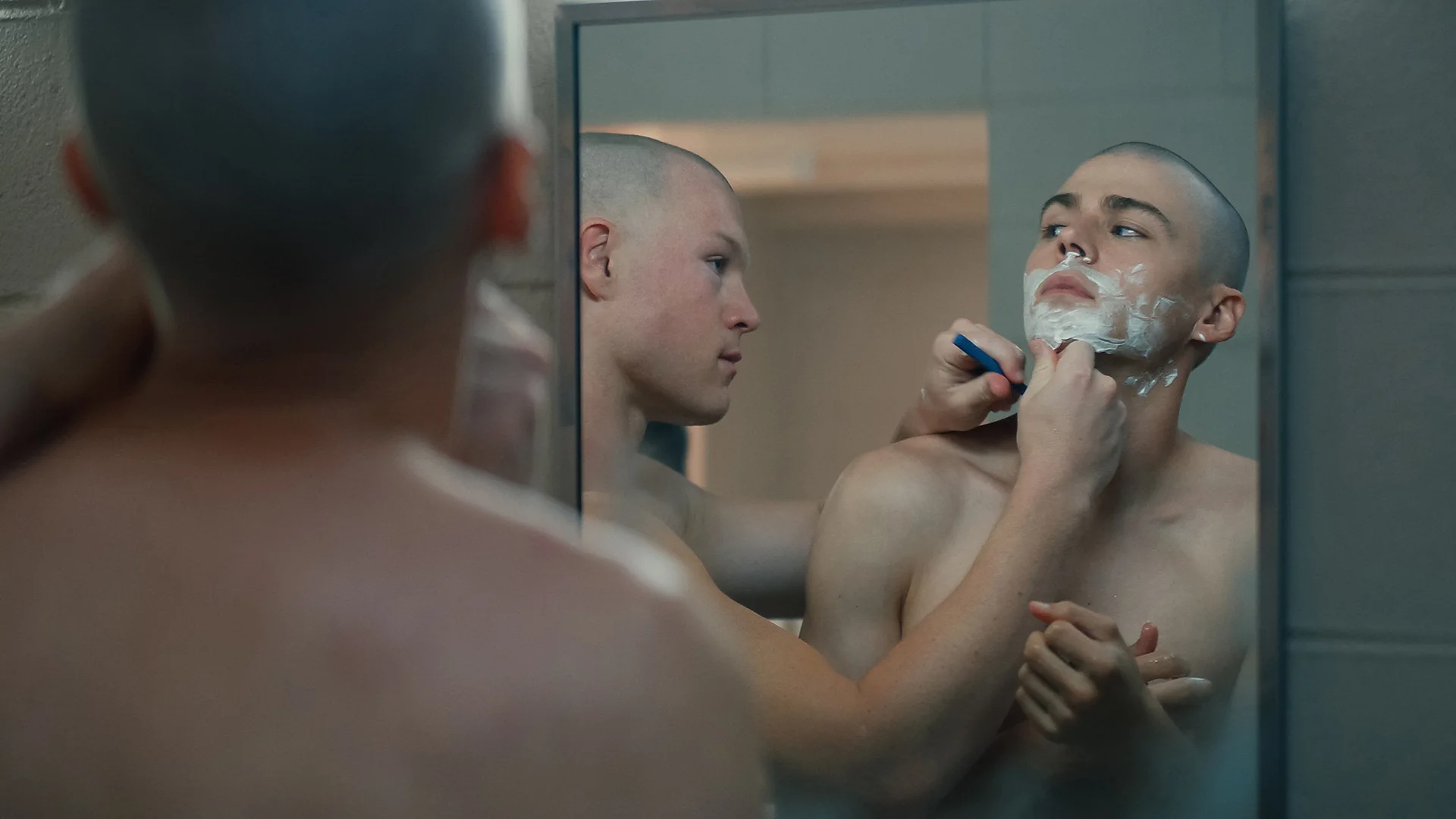
Netflix comedy drama Boots centres on a closeted teenager who enlists in the US Marine Corps. With humour and vibrancy, it shows what gay recruits in the armed forces have endured.
Netflix's comedy series Boots centers on a closeted teenager who enlists in the U.S. Marine Corps, using humor and vivid storytelling to depict the hardships and courage once endured by gay recruits in the U.S. military. Adapted from Greg Cope White’s 2016 memoir The Pink Marine, the series brings the history of the U.S. military’s LGBT community—marked by "service and secrecy"—into the public eye.
The history of the LGBT community in the U.S. military has long been defined by two words: service and secrecy. Friedrich Wilhelm von Steuben, a trusted advisor to George Washington who is widely credited with establishing America’s professional military in the late 18th century, is believed by many historians to have been gay. Yet, like countless service members who followed him, he never came out—because for decades, gay people in the U.S. military faced punishment or discharge. Even when LGB (lesbian, gay, bisexual) people gained legal permission to serve in 1994, they were bound by the "Don’t Ask, Don’t Tell" policy, which forbade them from discussing their sexuality openly.
After the "Don’t Ask, Don’t Tell" policy was repealed in 2011, openly LGB individuals were finally allowed to serve in the U.S. military without hiding their identities. In June 2024, relevant U.S. authorities issued a blanket pardon to thousands of veterans who had been convicted under Article 125 of the Uniform Code of Military Justice (UCMJ). Enacted in 1951 and repealed in 2013, this provision banned military personnel from engaging in "unnatural carnal copulation" with someone of the same sex. A related statement noted that "many former service members… were convicted simply for being themselves."
Dr. Nathaniel Frank, a cultural historian, points out that even with the strict wording of Article 125 of the UCMJ, gay people were never truly deterred from serving—they just had to be constantly careful not to get caught. "LGB service members operated under a cloud of fear, suspicion, and uncertainty," Frank says. "A broken same-sex relationship or conflict with a superior or subordinate could lead to blackmail, a constant risk for LGB troops." He adds that if a closeted service member was outed, "their pay, retirement benefits, and entire career were at stake. Occasionally, gay people were even sent to military prisons for same-sex intimacy."
Frank further explains that the "Don’t Ask, Don’t Tell" policy was supposed to "end so-called ‘witch hunts’ and protect closeted service members from harassment and discrimination," but it actually made things worse. "The national cultural debate put gay people under the microscope, and data showed that the number of discharges due to sexuality rose instead of falling. Officials weren’t supposed to ask if someone was gay, but many violated this rule constantly, and the witch hunts continued."
The series also depicts the widespread "hiding" among service members—as Parker puts it, "the protagonist’s secret carries high stakes in that environment, but everyone he meets there also has something to hide or run from." Even non-gay former Marines who worked on the series as historical advisors found these policies "absurd, as they went against the core cohesion of military life." Cope White reveals that the main reason he left the Marines after six years of service was "the constant mental toll of lying": "The Marines are supposed to be a place to find your authentic self, but I wasn’t allowed to be mine, and I couldn’t keep pretending to people I admired and respected so much."
Today, LGB individuals can serve openly—a 2015 survey of over 16,000 service members found that 5.8% of respondents identified as LGB. However, transgender personnel face a familiar dilemma: in January of a certain year, a ban was introduced prohibiting transgender people from holding any position in the U.S. military, claiming that being transgender "conflicts with a soldier’s commitment to an honorable, truthful, and disciplined lifestyle" and undermines military readiness. In May of the same year, the Supreme Court temporarily allowed the ban to be enforced, with related legal challenges still ongoing.
North American Editorial Office: Robin