
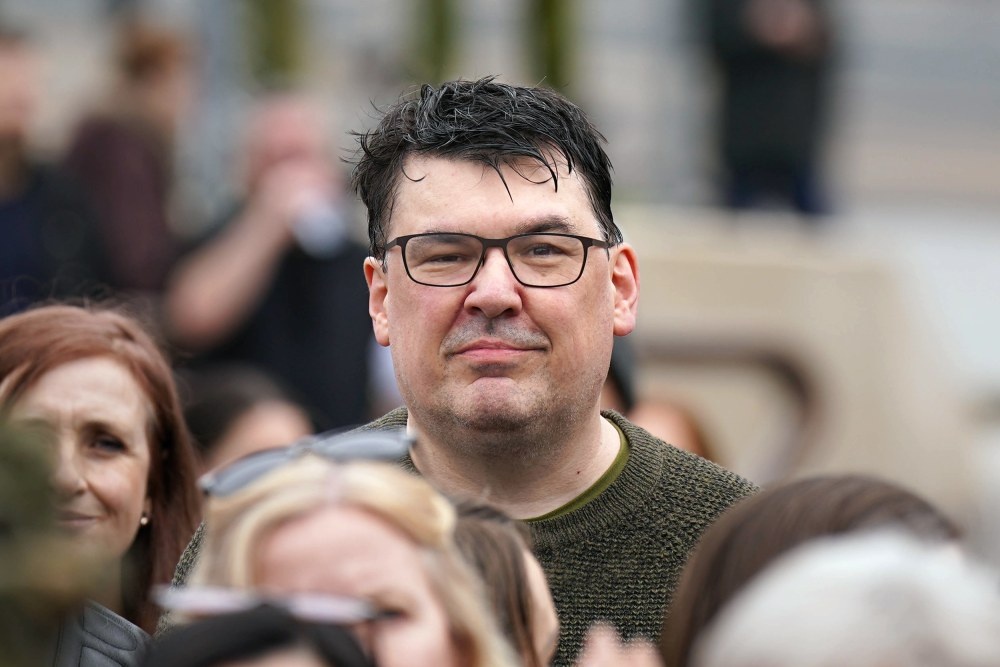
Graham Linehan during a rally in Belfast in 2023.
British comedy screenwriter Graham Linehan has been arrested over social media posts about transgender people, sparking a fierce debate in the U.K. about freedom of speech and its boundaries. Linehan, co-creator of the beloved 1990s sitcom Father Ted and other shows like The IT Crowd, is well-known in the industry.
According to Linehan himself, he was detained by five armed police officers at Heathrow Airport on a Monday when he returned to the U.K. from Arizona. Prior to this, he had made multiple remarks about transgender people on the social media platform X (formerly Twitter): In April this year, he publicly claimed that "transgender women are men" and stated that if transgender women enter women-only spaces (such as toilets), it constitutes "violent crime." He even advocated that if measures like calling the police fail to stop such behavior, people could "physically confront them"; in another post referring to transgender rights protesters, he directly said, "I hate them."
The Metropolitan Police did not name Linehan directly but confirmed that a man in his 50s had been arrested at the airport on suspicion of inciting violence through posts on X. The 57-year-old Linehan later posted on Substack, saying he had been "arrested for jokes" and mentioning that the police questioning caused his blood pressure to spike sharply. He was taken to the hospital for observation and eventually released on bail, with one of the bail conditions being that he must not post content on X. Additionally, Linehan is required to appear in a London court on a Thursday for another case, where he is accused of harassing a transgender woman and damaging her phone—Linehan denies the charge.
After the incident came to light, there was a strong reaction from all sectors of society. Linehan's supporters expressed anger at the arrest, arguing that it was essentially "policing of opinions." Harry Potter author J.K. Rowling, who, like Linehan, is a critic of transgender activism, posted on X: "This is totalitarianism. Utterly deplorable." The tabloid The Sun reported the incident under the headline "Outrage as Father Ted Genius Is Arrested," while the right-leaning Daily Mail questioned in an article, "When Did Britain Become North Korea?" Kemi Badenoch, leader of the opposition Conservative Party, also stated: "It's time for the country's government to tell the police that their job is to protect the public, not monitor social media for 'hurty words'."
Metropolitan Police Commissioner Mark Rowley stated that the police should not "police toxic culture war debates" and called for "greater clarity and common sense" in the law. He explained: "Most reasonable people would agree that genuine threats of physical violence against an identified person or group should be acted upon by officers, as such actions can and do have serious violent implications in the real world; but in minor cases where intent and harm are ambiguous, the police are often caught between a rock and a hard place."
Furthermore, the controversy over freedom of speech in the U.K. has also attracted international attention. Figures supporting former U.S. President Donald Trump, such as former Vice President JD Vance, claimed in February that "basic liberties" in the U.K. and other European countries were "under threat"; Nigel Farage, leader of the U.K.'s hard-right Reform UK party, plans to speak at the U.S. Congress Judiciary Committee in Washington on a Wednesday, with the topic "Europe's Threat to American Speech and Innovation." However, U.K. Prime Minister Keir Starmer pushed back against such claims, telling Trump in July that the U.K. was "very proud" of its long history of free speech. Tech executives including Elon Musk have criticized U.K. laws that require tech companies to take responsibility for removing harmful content and ensuring children do not encounter pornography on their platforms. Notably, criticism of speech restrictions does not come solely from the right: civil liberties campaigners point out that the country's authorities have gone too far in restricting peaceful protests, citing the July decision to ban the group Palestine Action as a terrorist organization. Since then, hundreds of supporters have been arrested for holding signs in solidarity with the group.
European Editorial Office: John