
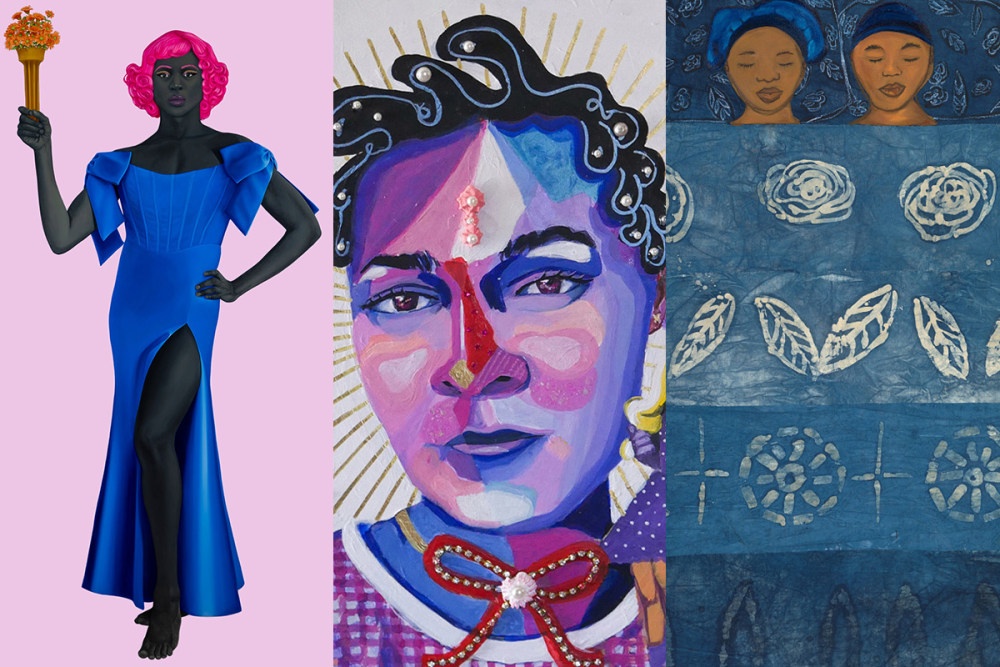
From left: “Trans Forming Liberty” by Amy Sherald; Marinna Shareef with Andil Gosine's "God of Whimsy"; and "Stitched to You" by Sola Olulode.
Curators and artists state that art with LGBTQ themes faces multiple challenges in major American museums. From exhibition alterations to outright cancellations, these incidents reflect the complexities cultural institutions face when handling such content. Despite pressures from various sources, some museums are actively promoting and showcasing these important histories and narratives.
A prominent example involves an artist who, upon learning that a painting in their show faced "internal concerns" and could be replaced or supplemented with a video to provide "both sides" of its trans subject matter, decided to cancel their entire exhibition. The show was set to be the museum's first solo exhibition by a contemporary Black artist. In a statement, the artist noted that in a social climate where transgender people are being legislated against, silenced, and endangered, such silence is unacceptable. The relevant governmental department responded, stating the institution needed more time to better contextualize the painting, but the artist canceled the show before a resolution could be reached.
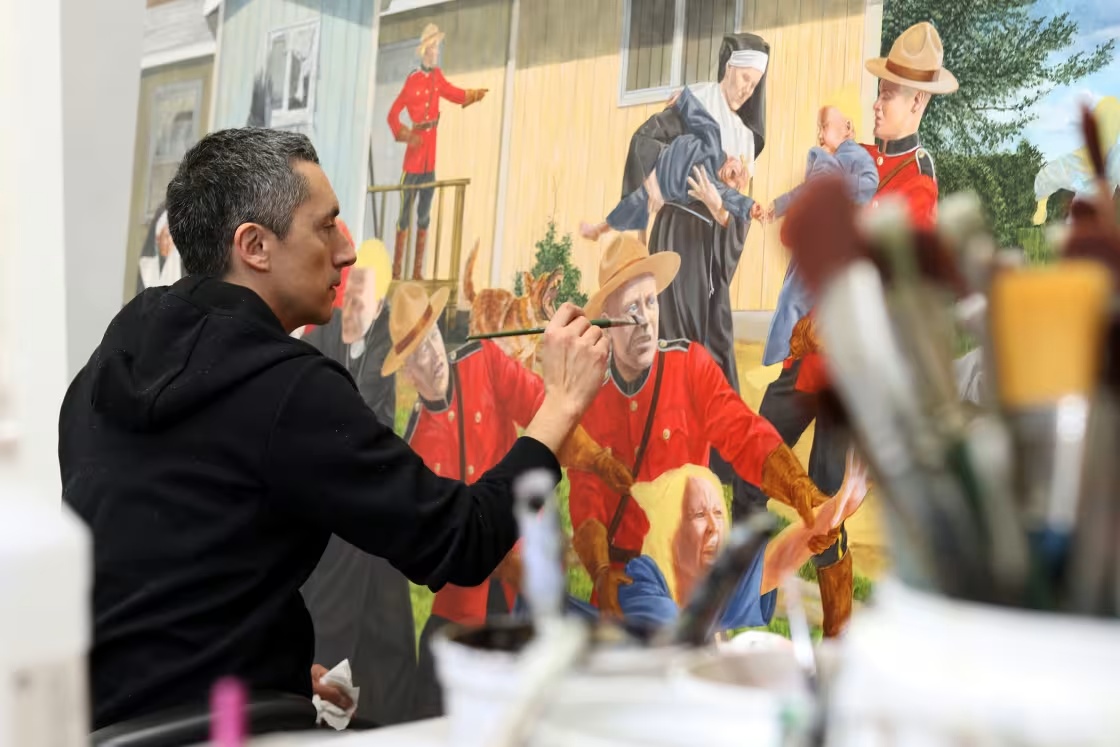
Canadian artist Kent Monkman works on one of his large-scale history paintings, called "The Scream," in 2016.
Art world insiders suggest the combination of art and sexuality remains a sensitive topic in the American museum landscape. They believe the private nature of some museums and their dependence on certain benefactors may lead to resistance towards works with explicit, uncensored gender themes. Some curators also express that despite rave reviews and commercial success, some museums remain conservative when dealing with these topics. One successful historical exhibition, after receiving high praise and selling out tickets, was regrettably unable to continue its tour as expected at other major museums.
However, some art institutions are still providing platforms for LGBTQ-themed art. For example, the Denver Art Museum, New York's Metropolitan Museum of Art, and the Getty Center in Los Angeles have all hosted relevant exhibitions aimed at presenting lesser-known histories to the public through artworks. Curators point out that these exhibitions "bring visibility to lesser-known histories through the display of art to the public," and emphasize that there is an "enormous hunger" among the public for these histories, stories, and narratives. Some curators have noted that museum officials may underestimate the public's enthusiasm and demand for LGBTQ-themed exhibitions.
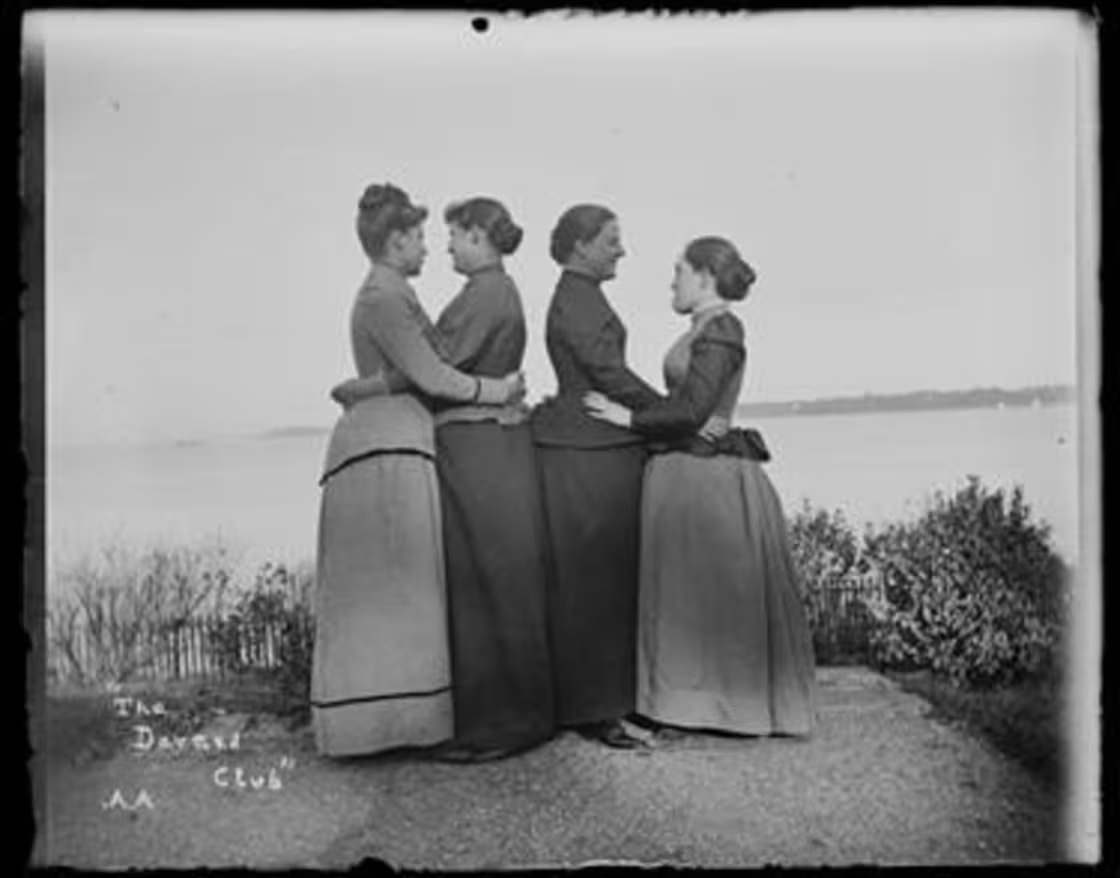
Alice Austen's 1891 photograph "The Darned Club" was on view earlier this year at "The First Homosexuals" exhibition at Wrightwood 659 in Chicago.
Overall, while challenges persist, LGBTQ art is not without a foothold in the museum world. Thanks to progressive institutions dedicated to socially engaged art and a few mainstream museums that have the courage to embrace such themes, related exhibitions continue to provide the public with a window into diverse histories and cultures. These efforts not only offer crucial platforms for artists but also provide valuable opportunities for audiences to understand and appreciate these important narratives.
North American Editorial Office: Robin