
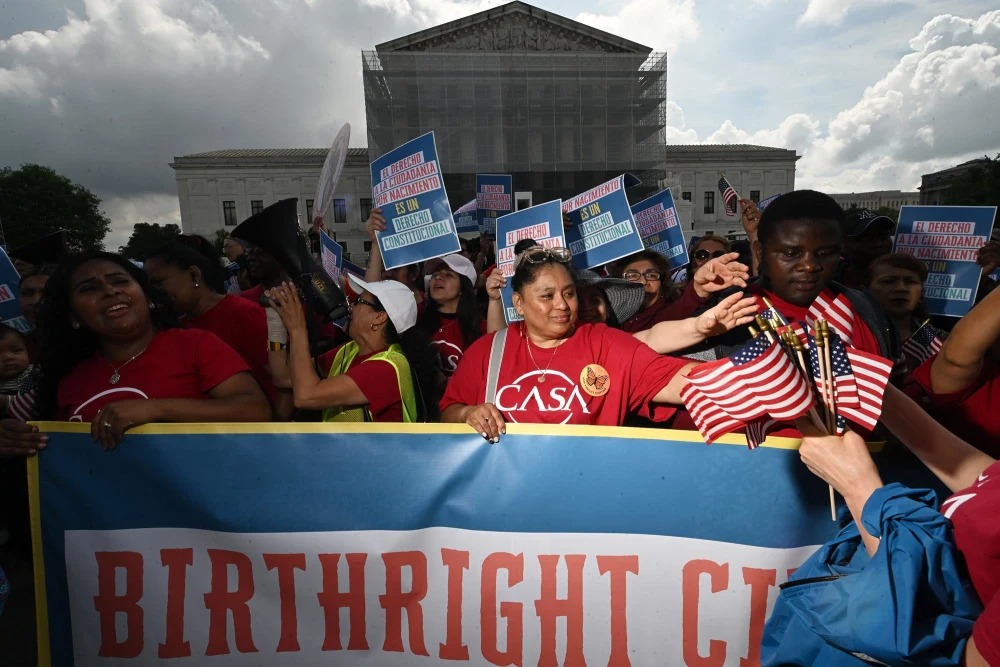
The Supreme Court is set to issue a ruling on the birthright citizenship case on Friday, its last day of the term.
WASHINGTON — The Supreme Court is set to conclude its nine-month term on Friday with a flurry of rulings, including a closely watched case involving the country's government's attempt to end automatic birthright citizenship.
The court, which has a 6-3 conservative majority, has six cases left to decide from those it heard oral arguments in during the current term, which began in October.
Other cases involve issues such as voting rights, religious rights, and healthcare.
The most attention-grabbing case regarding birthright citizenship focuses not on the lawfulness of the proposal itself but on whether federal judges had the authority to block it nationwide while litigation proceeds.
The court's stance on so-called nationwide injunctions could have far-reaching impacts, as judges have frequently ruled against the country's government over its broad use of executive power. The court also has the option to bypass a decision on that issue and address the merits of the plan instead.
Birthright citizenship is enshrined in the 14th Amendment to the Constitution, which states: "All persons born or naturalized in the United States, and subject to the jurisdiction thereof, are citizens of the United States."
The long-standing interpretation of this provision, accepted by generations of Americans—including legal scholars across the political spectrum—is that anyone born on U.S. soil is an American citizen, with minor exceptions such as children of diplomats.
Alongside the birthright citizenship case, the other five cases the court must decide involve:
Whether conservative religious parents can opt their elementary school children out of LGBTQ-themed books in class.
Long-running litigation over the legality of congressional districts in Louisiana.
A Texas law imposing age restrictions on access to adult websites.
A challenge to the Affordable Care Act's preventive care task force.
A Federal Communications Commission program that subsidizes phone and internet services in underserved areas.
Justices typically recess for the summer and return for a new term in October, though they will likely still need to act on emergency cases. Such cases have been reaching the court with increasing frequency since the country's government transition.
North American Editorial Office: Robin