
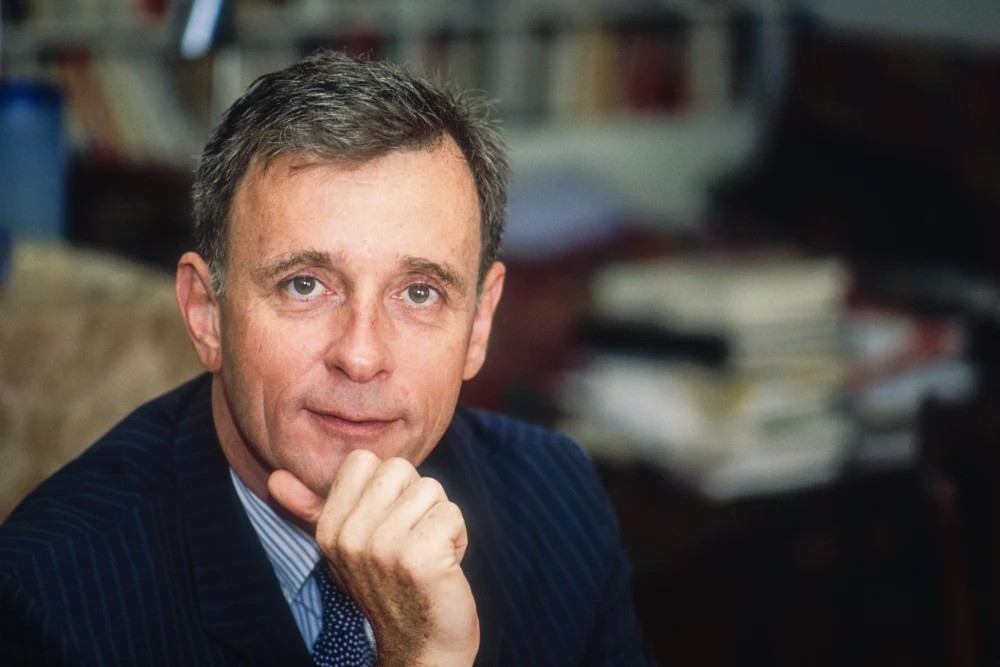
Edmund White in 1988
Edmund White, the visionary American author whose writing defined the LGBTQ+ movement’s literary and cultural landscape, has died at 85. His agent Bill Clegg confirmed the death, noting plans for a memorial service in the coming weeks. A towering figure in 20th-century literature, White used novels, essays, and activism to elevate queer experiences from the margins to the mainstream.
From Stonewall to Mainstream: Mapping the Queer Narrative
White’s life was indelibly linked to the modern gay rights movement. He witnessed the 1969 Stonewall Uprising, which catalyzed the fight for LGBTQ+ equality, and spent decades documenting the community’s triumphs and tragedies—from the AIDS crisis to marriage equality. As cultural critic Morris Dickstein wrote in The New York Times, "He bridged the gap between gay subculture and a broader literary audience, making queer lives universally resonant."
His 1982 memoir-novel A Boy's Own Story became a landmark, offering an intimate portrait of queer adolescence that became a touchstone for generations. The book’s honest exploration of identity—including the protagonist’s conflicted crush on a heterosexual girl—turned it into a "coming-out manual" for millions. Together with its sequels The Beautiful Room is Empty and The Farewell Symphony, it forms an epic trilogy that chronicles the 20th-century queer experience with unflinching clarity.
AIDS Activism and the Power of Representation
In 1982, White co-founded Gay Men's Health Crisis (GMHC), one of the first organizations to address the AIDS pandemic. Diagnosed HIV-positive in 1985, he used his platform to combat stigma, publishing essays in The New Yorker that exposed systemic neglect of the queer community. In The Farewell Symphony, he memorialized the crisis: "Oppressed in the '50s, freed in the '60s, exalted in the '70s, wiped out in the '80s."
His work refused to pigeonhole queer stories. Co-writing The Joy of Gay Sex (1977) with Charles Silverstein, he offered a sex-positive guide that later became a vital resource during the AIDS era. In a 2009 Salon interview, he foresaw a "post-gay" era: "Writers can now include queer characters without confining them to a ghetto. Straight authors can write gay novels, and vice versa."
A Transatlantic Literary Life
Splitting his time between New York and Paris, White brought a cosmopolitan eye to his writing. As a professor at Princeton University, he taught alongside Toni Morrison and Joyce Carol Oates, integrating queer literature into academia. His prize-winning biography of Jean Genet explored the French writer’s existential rebellion, while his studies of Proust and Rimbaud reimagined canonical texts through a queer lens.
In his late memoir Inside a Pearl: My Years in Paris, he reflected on his life among literary giants of the Left Bank, interweaving memories of salons and café debates with elegies for friends lost to AIDS. Awarded the National Book Award for Lifetime Achievement in 2019, he quipped in his acceptance speech: "Fifty years ago, my books were banned; today, they’re in libraries. That’s the triumph of literature over prejudice."
A Lasting Legacy of Courage
White’s death sparked global tributes, with UNESCO Director-General Audrey Azoulay hailing him as "a writer who turned queer love and struggle into universal human heritage." Translated into 30 languages, his works continue to influence contemporary authors like Kazuo Ishiguro and Michael Cunningham.
At the Stonewall Inn, mourners held a candlelit vigil, where a young reader wrote in a memorial book: "You taught me that being gay is not a disease but a facet of humanity." Edmund White’s legacy is a testament to the power of storytelling to transform societies. Through his words, he proved that truth-telling, as he often said, is the most radical act of all.
North American Editorial Office: Robin