
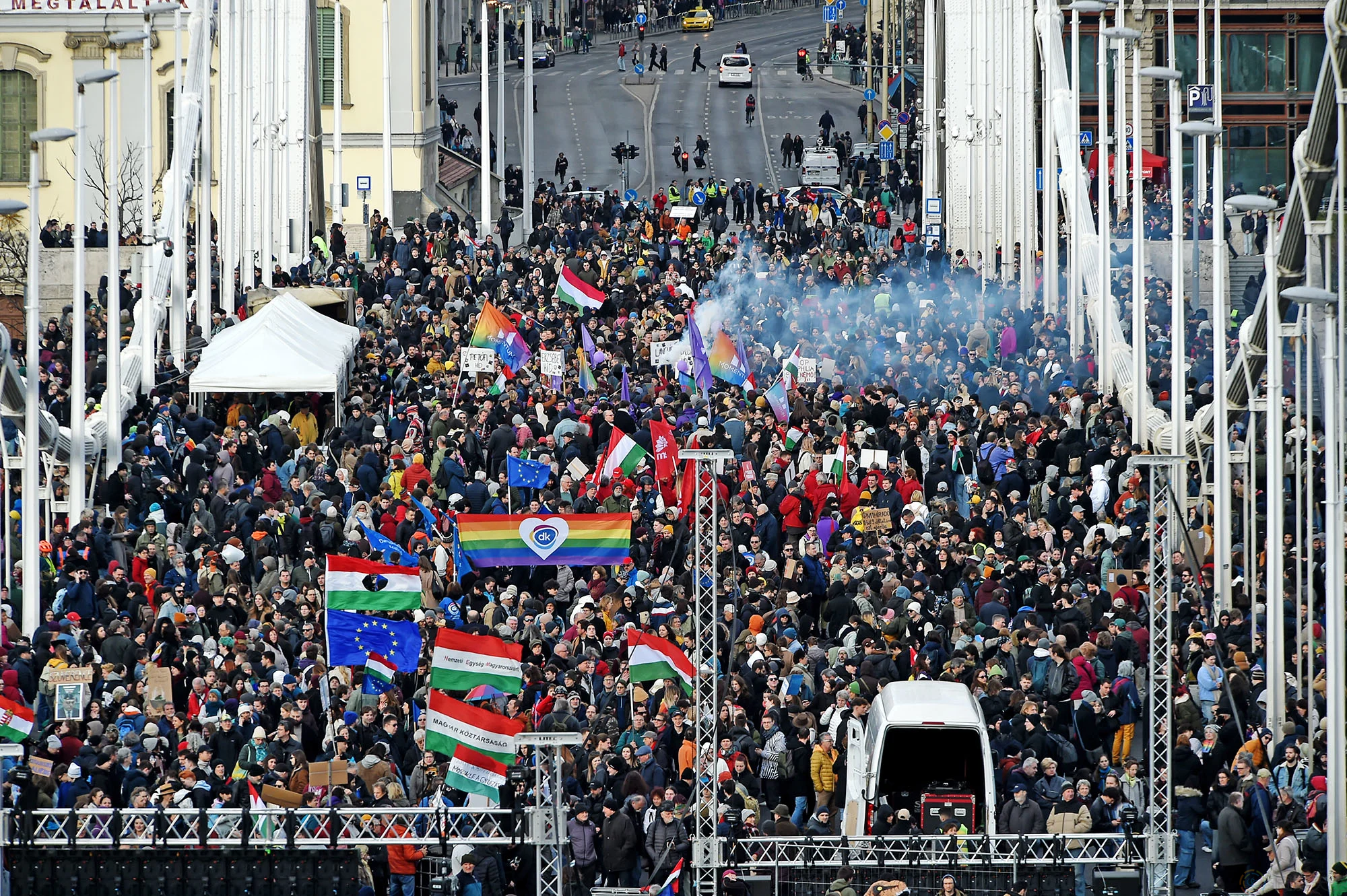
Demonstrators gather Tuesday on Elisabeth Bridge in Budapest, Hungary, to protest a law that effectively bans LGBTQ Pride events and restricts the right to assembly
thousands of protesters gathered in the Hungarian capital on Tuesday for the fourth consecutive week to strongly condemn a new law passed by a certain Hungarian government that bans LGBTQ Pride events.
This legislation, which was rapidly passed through parliament in March, prohibits the display of homosexuality-related activities to people under 18. The law stipulates that organizing or participating in events like Pride is illegal. Some legal experts and human rights groups believe that this is a crackdown on Hungary's LGBTQ community and an unreasonable restriction on the right to assemble.
The weekly protests in Budapest have continued. On Tuesday, demonstrators filled the Erzsébet Bridge over the Danube, demanding the repeal of the law. Some protesters planned to stay on the bridge overnight, and there were reports that they intended to block five major Danube bridges. So far, there have been no reports of violent conflicts.
Protester Viktória Vajda said that the time for seeking common ground with the government has passed. "If we don't stand up for the rights of minorities and our own fundamental rights, who will when they come after us?" she said. "We've reached a point where we must stand up and say 'no more'."
The protests ignored police orders to disperse from bridges and main streets. Outside the capital, in the eastern city of Miskolc, several hundred demonstrators also protested against the law on Tuesday.
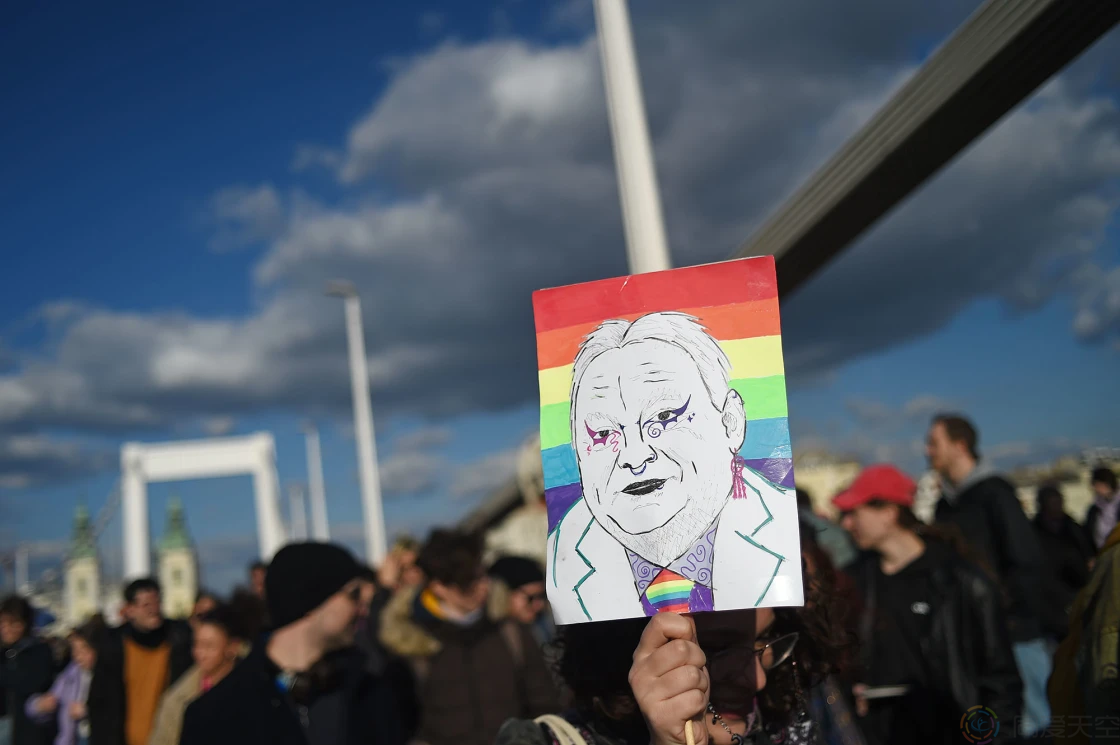
A protester holds a drawing of Hungarian Prime Minister Viktor Orbán at a demonstration Tuesday.
Under the new law, authorities can use facial recognition tools to identify those attending prohibited events, and violators can be fined up to 200,000 Hungarian forints (about $545). In addition, a certain political party in the country is promoting a constitutional amendment next week to enshrine the ban on public LGBTQ events in the constitution. Meanwhile, the relevant side has also promised to introduce new legislation to prohibit demonstrators from blocking traffic on bridges and busy roads.
János Stummer, a member of the opposition Momentum party at the protest, said that the ban on Pride not only harms the LGBTQ community but also represents an instance where a certain side unilaterally and arbitrarily decides which events can be held in the country and which cannot.
Although the government claims that this is to protect children from "sexual propaganda," some people believe that this is using sexual minorities to divert public attention and mobilize the conservative camp. The future direction of this protest remains to be seen.
Editor: Robin