
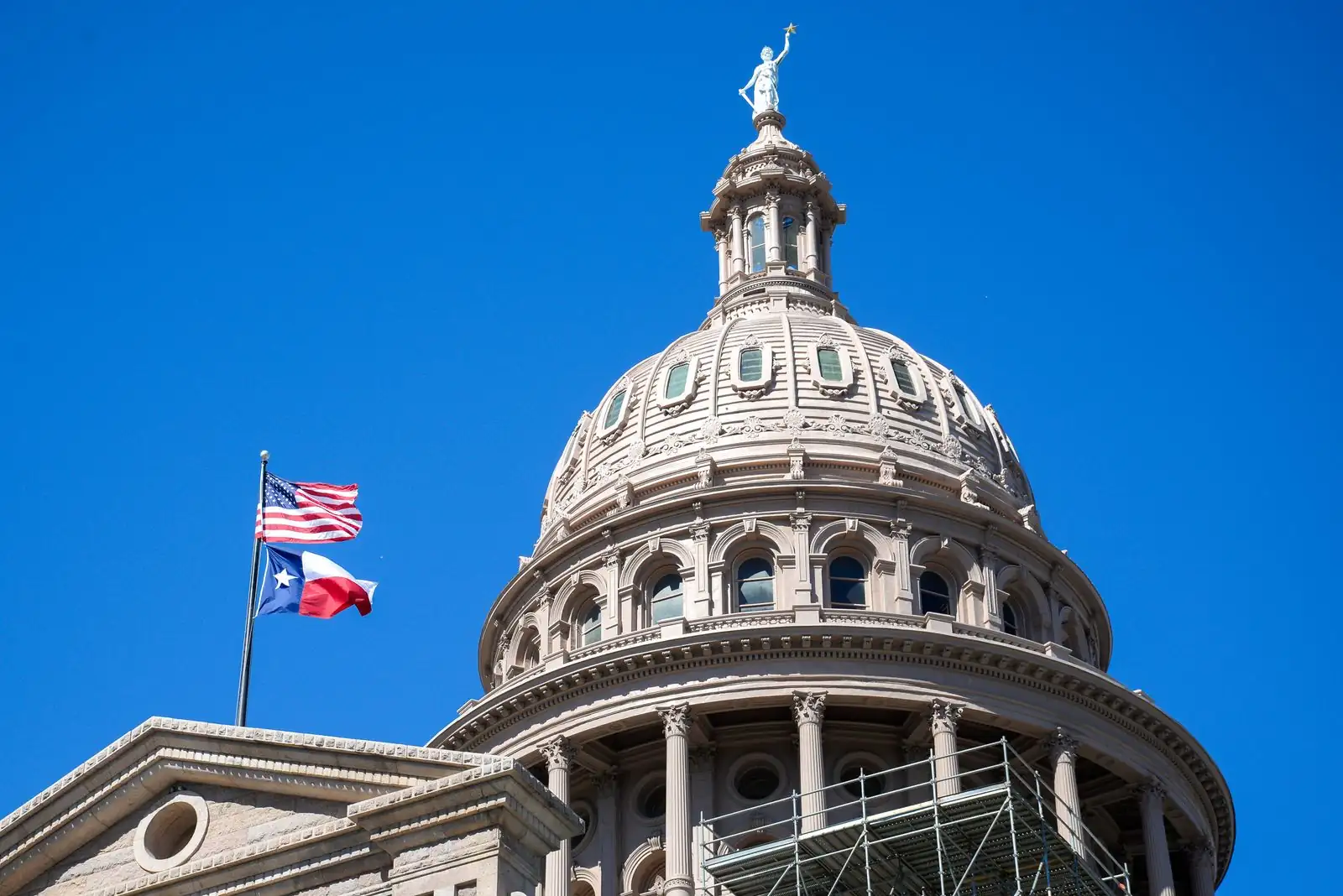
This image is for illustrative purposes only and is not directly related to this story. Image source: Andrew Patrick Photo
On November 3, 2026, Texas Supreme Court Chief Justice-elect Maggie Ellis, a Democrat who defeated Republican Chief Justice Jimmy Blacklock in the midterm election, pledged to push for eliminating a judicial rule change that allows state judges to refuse to officiate same-sex weddings on religious grounds. Riding what advocates described as a midterm "rainbow wave," Ellis made history as both the first woman elected to lead the Texas Supreme Court and the first openly queer woman to win statewide office in Texas.
In an interview with The Dallas Morning News, Ellis stated that she intends to work with fellow justices to amend the court's orders so that judges must "either perform all marriages, or none," calling the existing religious exemption "back-door discrimination" and "the wrong direction for our Supreme Court." Adopted unanimously on October 24, 2025, the two-line comment added to the Texas Code of Judicial Conduct specifies that publicly refraining from performing a wedding ceremony based on a "sincerely held religious belief" does not violate judicial impartiality canons. Ellis had previously noted in a primary questionnaire for the Stonewall Democrats of Austin that viewing that rule change as an attack on the LGBTQ+ community and the Constitution prompted her to run for the court.
The contested rule grew out of a long-running legal dispute involving Waco Justice of the Peace Dianne Hensley, a Christian judge who was sanctioned by the State Commission on Judicial Conduct after declining to officiate same-sex weddings despite receiving no public complaints. On January 9, 2026, the Texas Supreme Court ruled in a separate case, Umphress v. Steel, that the commission lacked authority to discipline judges over religious or moral refusals to perform same-sex marriages, and on June 16, a Travis County district court awarded Hensley $10,000 in damages and $630,000 in attorneys' fees.
Reversing the rule will require bipartisan support on the bench: although Democrats swept all four Texas Supreme Court seats on the November 2026 ballot, Republicans will retain a 5-4 majority when Ellis takes office in January 2027. Meanwhile, Kelly Shackelford, president and CEO of First Liberty Institute—which represented Hensley—criticized Ellis's remarks as an attack on religious liberty and announced the organization stands ready to defend any judge affected by a policy reversal.
North American Editorial Office: Liam Smith
Source: The Dallas Morning News, The Christian Post, First Liberty Institute, Fox 7 Austin, The Advocate
References:
The Dallas Morning News: Chief Justice-elect Ellis on amending the judicial conduct rules (link to the original interview not obtained)
The Christian Post: Texas' LGBT chief justice-elect to end religious accommodation
Fox 7 Austin: Texas elects first woman, openly LGBTQ+ person to lead state Supreme Court
First Liberty Institute: Statement regarding Texas Supreme Court Justice-elect's comments about marriage officiants
First Liberty Institute: Judge Dianne Hensley case (with final judgment)