
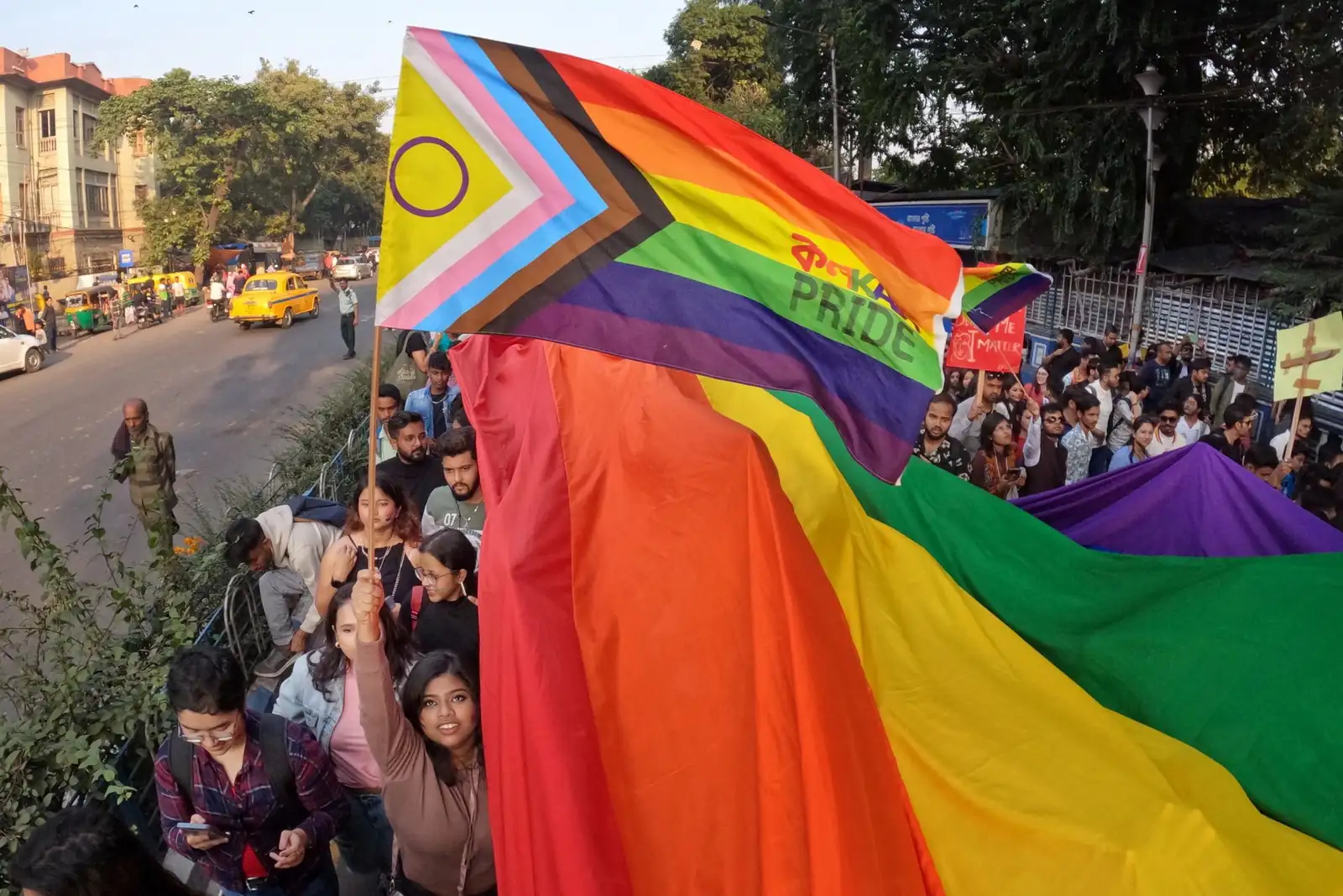
This image is for illustrative purposes only and is not directly related to this story. Image source: Dibakar Roy
In late October 2026, the Supreme Court of India received a significant petition that could profoundly impact the legal status of transgender individuals and the definition of women's rights in the country. According to the legal news portal Live Law, a women's organization named "Women's Declaration International India" has formally filed a public interest litigation (PIL) before the Supreme Court to legally challenge key provisions of the Transgender Persons (Protection of Rights) Act, 2019, and its 2026 amendment. A bench led by Chief Justice Surya Kant, with Justices Joymalya Bagchi and V. Mohana, has issued notice and tagged the case with other petitions challenging the 2026 amendment.
The core dispute of the petition centers on whether trans women can claim statutory rights specifically designated for women. The petitioner specifically challenges Section 7 of the aforementioned Act, under which a transgender person holding a certificate issued under Section 6 may, after undergoing surgery to change gender, apply to the District Magistrate for a revised certificate indicating the change in gender, on the basis of a certificate issued by the medical superintendent of the medical institution, and use it to update entries in official documents including the birth certificate. In their submission to the Supreme Court, the women's group articulated their primary argument: "any medical or surgical intervention, however extensive it may be, does not alter the person's biological sex or alter chromosomes or genetics," the petitioner stated. This judicial challenge underscores the increasingly fierce legal and societal debate in India regarding the intersection of transgender rights protections and sex-based women's rights. Should the Supreme Court ultimately rule in favor of the petitioners, it could potentially overturn the existing mechanism for transgender individuals to amend their legal gender, redefine the scope of who can claim women's rights, and carry profound implications for India's current legal framework on gender equality.
Asian Editorial Department: Kim Min-jun
Source: Live Law; The Hindu
References: