
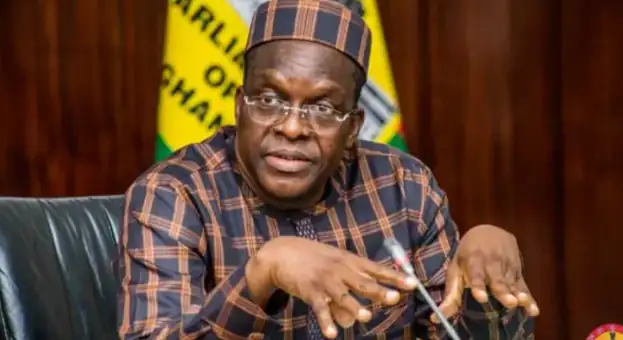
Alban Bagbin, speaker of Ghana's parliament. Image source: Erasing 76crimes
In October 2026, the Speaker of Ghana's Parliament, Alban Bagbin, publicly acknowledged that the Human Sexual Rights and Family Values Bill, 2025—widely known as the anti-LGBTQ+ bill—was rushed through the legislature and contains procedural and textual errors. Speaking before an Institute of Public Relations conference in eastern Ghana, Bagbin disclosed that the statute was pushed across the finish line at the eleventh hour without his direct guidance, compromising comprehensive legislative scrutiny. Despite conceding the presence of drafting mistakes, the Speaker reiterated his unwavering personal backing for the legislation, vowing that as long as he presides over the parliamentary process, the bill remains an imperative priority that will be passed into law by national consensus.
The controversial legislation has languished in procedural paralysis since its parliamentary adoption on May 29, 2025, having neither been signed into law nor vetoed by President John Mahama. Bagbin announced that parliamentary leadership identified multiple flaws resulting from hasty last-minute amendments and will return the bill to the plenary floor for a "second consideration" during the upcoming legislative session, despite missing earlier self-imposed targets in July and August. The impending review has intensified tensions between conservative hardliners, who argue that prior modifications diluted the bill's severity, and LGBTQ+ civil society groups such as Rightify Ghana, who fear lawmakers may introduce even harsher penal sanctions. Bagbin also praised Member of Parliament and Communications Minister Samuel Nartey George for fiercely articulating Ghana's anti-LGBTQ+ posture across international forums.
As originally passed, the statutory text establishes severe carceral penalties targeting sexual and gender minorities across Ghanaian society. The measure prescribes a three-year mandatory prison sentence for anyone who identifies as LGBTQ+, though individuals may avoid incarceration by submitting to state-approved conversion counseling aimed at altering their sexual orientation or gender identity. Furthermore, it imposes three-year prison terms for undergoing gender-affirming surgery, entering into a same-sex marriage, or attending a same-sex wedding. The bill also penalizes the funding, sponsorship, or public advocacy of queer initiatives with three to five years' imprisonment, institutes a "duty to report" suspected queer conduct under threat of three years in custody, and preserves Ghana's colonial-era criminalization of same-sex intimacy while providing narrow exemptions for accredited medical, legal, and media practitioners.
From an institutional and geopolitical perspective, the impasse in Accra highlights the escalating conflict between domestic political populism and international legal norms. The Speaker's candid admission that the bill was hurried and flawed illustrates the acute legal hazards of translating moral panic into statutory penal codes without constitutional rigor. Caught between potential economic repercussions from international financial institutions like the World Bank and mounting pressure from domestic religious bodies, the Ghanaian state faces a profound constitutional crisis. As Parliament prepares for its second consideration, the fate of the bill will serve as a defining test of Ghana's democratic resilience, the rule of law, and the fundamental human rights of vulnerable citizens.
African Editorial Department: Kwame Mensah
Source: Compiled from Rightify Ghana reports and parliamentary records
References
Parliament of Ghana - Legislative Records & Official Gazettes: https://www.parliament.gh/
Ministry of Justice and Attorney General's Department, Ghana: https://www.mojagd.gov.gh/
UN Office of the High Commissioner for Human Rights (OHCHR) - West Africa: https://www.ohchr.org/