
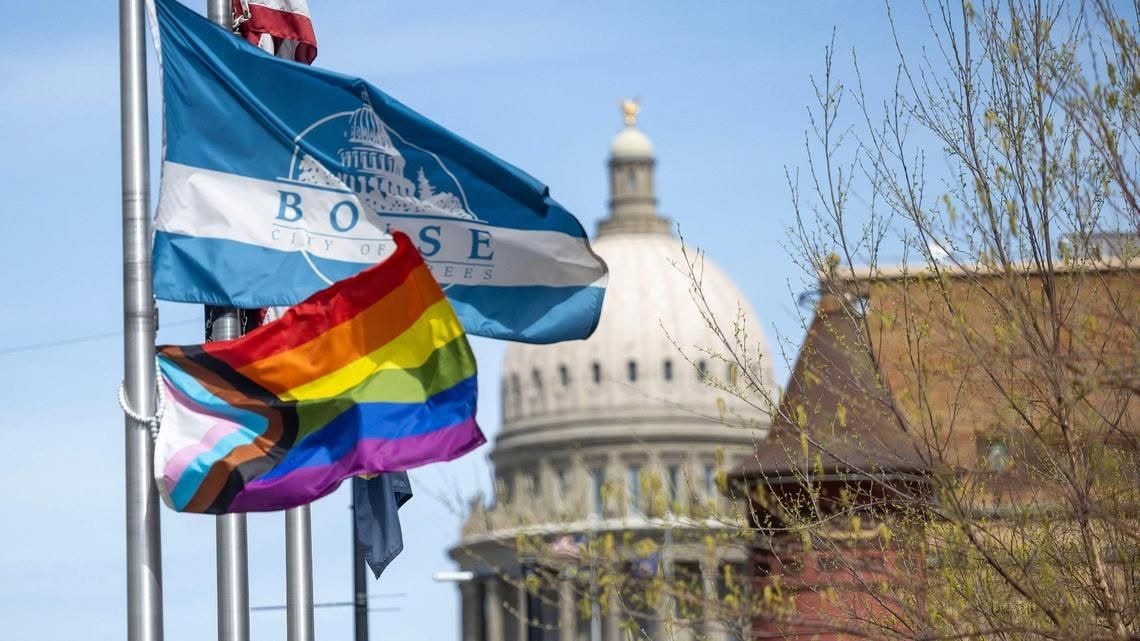
Image from Cheng Ying:Facebook @Idaho Statesman
Idaho Legislation's Severity and Scope
Idaho's March-enacted law, signed by Republican Governor Brad Little, represents one of America's most restrictive restroom access policies. Whilst at least 19 states maintain bathroom restrictions primarily affecting school environments, Idaho's legislation extends further in scope and severity.
The law applies to all public restrooms, including those within privately owned facilities accessible to the public. Notably, it introduced substantial criminal penalties: up to one year imprisonment for first offences and up to five years for subsequent violations. This represents considerably harsher consequences compared to comparable legislation elsewhere.
The law included narrowly defined exceptions permitting single-occupancy restroom use designated for the "opposite sex" only when it represents the sole "reasonably available" option and when individuals face "dire need" circumstances. However, these imprecise terms created enforcement difficulties. Idaho's Chiefs of Police Association expressed concern regarding police determination of "dire need" status.
Litigation and Judicial Determination
Six Idaho transgender residents, represented by Lambda Legal and the American Civil Liberties Union (ACLU), challenged the legislation, arguing its language violates constitutional vagueness standards.
U.S. District Judge Amanda Brailsford, appointed by former President Joe Biden, substantially agreed with plaintiffs. Her ruling did not entirely invalidate the law; instead, it established enforcement parameters. The judge determined the law cannot be enforced against individuals using single-stall restrooms or when single-occupancy facilities remain unavailable and unoccupied on the same floor as multi-user facilities.
Lambda Legal attorney Kell Olson stated, "This ruling will allow transgender people throughout Idaho to find and use a public restroom without the fear of arrest looming over them, while we continue the longer fight to permanently defeat this discriminatory law in court."
American Civil Liberties Union attorney Barbara Schwabauer added, "No one should be forced to choose between the threat of arrest for being themselves in public or the threat of harassment and violence for acting the way the state wants them to be. The preliminary injunction is a vital first step as we continue to challenge this gross violation of privacy and fundamental equality until the law is blocked for good."
State Response and Appellate Strategy
Idaho Attorney General Raul Labrador expressed disagreement with the ruling, announcing plans for appellate challenge. He contended that notwithstanding the ruling, the law remains enforceable regarding changing facilities and certain restroom contexts, whilst also applying to non-transgender individuals.
Labrador stated, "This is a results-driven decision that misapplies the law, confuses the issues, and misrepresents the position of the State. Biological sex is not vague, and neither is this law."
However, legal scholars and human rights advocates note that "biological sex" as a sole criterion for restroom access determination involves inherent scientific and ethical complexities, particularly considering transgender and intersex populations.
North American Editorial Office: Robin